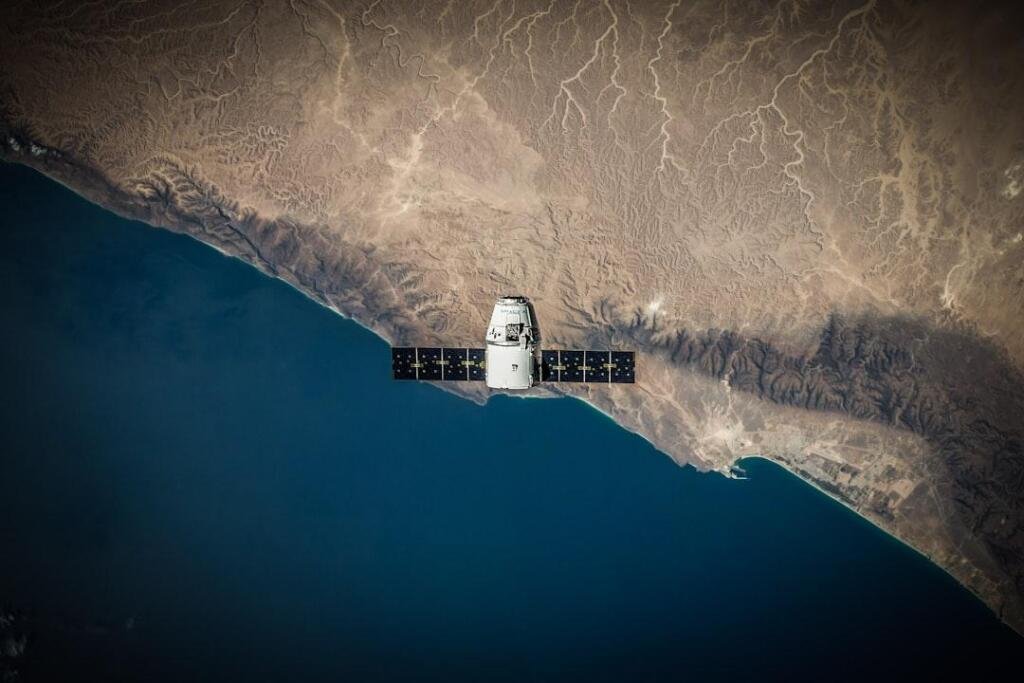
Updated: October 5, 2026. Google has put AI hardware into orbit. Its first Project Suncatcher prototype satellite launched on October 1, the company has established contact, and the spacecraft is operating as expected.
That does not mean Google has built an orbital data center. The mission is much more practical — and arguably more interesting. It is an experiment designed to answer whether the same Tensor Processing Units (TPUs) used for artificial-intelligence workloads on Earth can survive launch, radiation, vacuum and extreme temperature changes in space.
If the answer is eventually yes at scale, companies could gain a radically different place to build power-hungry AI infrastructure. But there are still enormous engineering and economic obstacles between one prototype and a useful space-based computing network.
Project Suncatcher in brief
- Google’s prototype satellite launched on October 1, 2026, aboard SpaceX’s Transporter-18 rideshare mission.
- The spacecraft was built in partnership with Planet.
- Google says it has confirmed contact and the satellite is operating as expected.
- The mission is testing TPU hardware under real radiation, thermal and launch conditions.
- Google’s long-term research question is whether scalable machine-learning infrastructure could operate in low Earth orbit.
- Future experiments are expected to investigate high-bandwidth optical links between satellites.
Why would anyone put AI chips in space?
The central attraction is energy.
Large AI systems require vast amounts of electricity for computing and cooling. On Earth, data centers compete for grid capacity, water, land and new power generation. Google says satellites in low Earth orbit can access near-constant sunlight and potentially generate up to eight times more solar power than comparable systems on Earth.
That creates a tempting idea: instead of building every new cluster on land, place some compute near an abundant source of solar energy.
But solar power is only one part of the problem. AI accelerators also need networking, thermal management, physical maintenance and reliable ways to move data between Earth and orbit.
What is Google testing right now?
The current Suncatcher satellite is a learning mission, not a commercial service.
Google says the team will collect in-orbit data on how its TPUs handle the physical stress of launch as well as radiation and thermal extremes. These are conditions that cannot be perfectly replicated in a terrestrial lab.
One major question is reliability. A conventional data center can replace failed hardware. A chip in orbit cannot be swapped by a technician during a routine maintenance window.
The cooling problem is harder than it sounds
People often imagine space as “cold,” but cooling electronics in a vacuum is difficult because there is no surrounding air to carry heat away.
Terrestrial servers rely heavily on air or liquid cooling. In space, heat must ultimately be moved through the spacecraft and radiated away. Reuters reported that Google’s test is intended to help evaluate cooling approaches alongside radiation and launch durability.
If future orbital clusters are packed with high-performance accelerators, thermal design could become one of the project’s biggest constraints.
How would many AI satellites work together?
A useful AI cluster needs chips to exchange enormous amounts of data quickly. On Earth, data centers use high-speed electrical and optical networking across relatively short distances.
Google’s longer-term concept involves constellations of satellites connected with optical communications. Future tests are expected to explore high-bandwidth laser links, which could allow separate spacecraft to behave more like pieces of one computing system.
This is essential. A collection of isolated chips in orbit is not equivalent to a modern AI data center.
Does this solve the environmental problems of AI data centers?
Not automatically.
Space-based compute could reduce pressure on terrestrial electricity grids and land if it eventually works. But it introduces other environmental and infrastructure questions: rocket launches, spacecraft manufacturing, orbital congestion, replacement cycles and end-of-life disposal.
So the useful comparison is not “clean space versus dirty Earth.” It is the total lifecycle cost and impact of each approach.
Why this launch matters even if orbital data centers never become mainstream
The experiment can still produce useful engineering knowledge. Radiation-resistant accelerators, efficient thermal systems and high-bandwidth optical networking can have applications beyond giant AI constellations.
It also shows how quickly AI infrastructure is becoming a strategic engineering problem. The industry is no longer focused only on better models and faster chips; it is searching for new energy systems, new cooling approaches and even new physical locations for computing.
What happens next?
Google says the current satellite will gather data over the coming weeks. The company has also discussed additional satellite tests to explore optical interconnects and other elements required for a larger system.
The most important questions to watch are:
- How well do TPUs tolerate radiation over time?
- Can thermal systems remove enough heat for sustained high-performance computing?
- Can satellites exchange data fast enough for distributed AI workloads?
- How much will launch and spacecraft costs need to fall?
- Can the system operate reliably without frequent physical repair?
What this does not mean
Google has not announced that Gemini training is moving to space, and the current mission is not a replacement for Google’s terrestrial data centers.
It is better understood as an engineering experiment that tests whether one possible future architecture is physically viable.
For more AI coverage, read BCC’s breakdown of GPT-6.1 Sol and how it compares with GPT-6 Astra.
Frequently asked questions
What is Google Project Suncatcher?
Project Suncatcher is a Google research effort exploring whether machine-learning computing infrastructure could one day operate in space using solar-powered satellites and Google TPU chips.
Has Google launched the first Suncatcher satellite?
Yes. Google said its prototype launched on October 1, 2026, and that the team established contact with the satellite.
Is there already a Google AI data center in space?
No. The current satellite is an experimental prototype designed to collect engineering data, not a production-scale orbital data center.
Why use space for AI computing?
The potential advantages include access to abundant solar energy and reduced pressure on terrestrial power systems, but networking, heat removal, launch cost and reliability remain major challenges.
Sources and further reading
- Google Research — Project Suncatcher prototype is in orbit
- Google Research — Engineering behind Project Suncatcher
- Reuters — Google’s first test of AI chips in space
Featured image: SpaceX via Unsplash. Image is illustrative and does not depict the Project Suncatcher spacecraft.
Follow Buzz Content Corner
For more useful technology and AI explainers, follow Buzz Content Corner (BCC) on Instagram and Facebook.