Updated: October 5, 2026. Surat Cyber Crime Branch has arrested a local social-media creator after a reel posted around Gandhi Jayanti allegedly used Mahatma Gandhi’s image in an objectionable manner.
The case is attracting attention because the creator, Simran Amit Patel, is reported to have around one million Instagram followers. But beyond the viral headline, the story raises a practical question for creators and ordinary users: when does provocative social content stop being only a platform issue and become a police matter?
Because the case is under investigation, the allegations should not be treated as a finding of guilt. This explainer separates what police and news reports say happened from the broader lessons for social-media users.
What happened in Surat?
According to The Indian Express and Times of India, Surat Cyber Crime Branch arrested 47-year-old Simran Amit Patel, a resident of the Adajan area, over an Instagram reel uploaded on October 1, ahead of Gandhi Jayanti.
Police allege that the reel used an image of Mahatma Gandhi taken from a ₹500 currency note in an objectionable context. The reel has since been deleted.
A complaint was filed at Umra police station by Dharmesh Gami, identified by The Indian Express as president of Bharatiya Gauraksha Manch. Police then opened an investigation and arrested Patel.
What is alleged — and what has not been established?
This distinction is essential.
What is reported: police say a reel was uploaded, a complaint was made and Patel was arrested in connection with the content.
What is not established by an arrest: guilt. An arrest is part of the criminal process, not a conviction. The allegations can be contested, and courts determine criminal liability based on the applicable law and evidence.
BCC is therefore not reproducing the reel or presenting the police allegation as a proven fact.
Why did police ask people not to reshare the content?
Police warnings about resharing can serve two purposes: limiting further circulation of material they consider objectionable and preventing users from creating additional legal or public-order problems by amplifying it.
For readers, the safest practical rule is simple: a controversial clip does not need to be reposted in full in order to discuss the news around it. Screenshots, edited clips and forwarded copies can extend the reach of material long after the original post is removed.
Why “it was just a joke” may not end the legal question
Online humour, satire and provocative commentary can involve free-expression considerations, but the legal analysis depends on the actual content, context, intent alleged by investigators and the specific law invoked.
Creators should be especially careful with edited depictions of public figures, religious symbols, protected classes, threats, harassment, obscenity allegations and content that could trigger public-order complaints.
That does not mean every offensive post is automatically illegal. It means platform virality and criminal law are different systems, and a creator can face consequences beyond account moderation.
What large creators should learn from the case
1. Review before posting, not after virality
Content that feels harmless inside a small group can be interpreted very differently when shown to hundreds of thousands of people without the original context.
2. Avoid relying on deletion as a legal strategy
Deleting a reel may stop new views from the original account, but copies, screen recordings and platform records may already exist.
3. Separate edgy creativity from unnecessary legal exposure
A provocative hook can increase reach, but the engagement upside may be tiny compared with the reputational and legal cost of a complaint.
4. Keep context clear
Satire, commentary and criticism are easier to understand when the audience can identify the purpose. Deliberately ambiguous edits can be interpreted in ways the creator did not expect.
5. Get professional advice when content is high-risk
Creators running large pages increasingly operate like media businesses. For sensitive campaigns or controversial themes, legal review can be a business expense rather than an afterthought.
What should ordinary users do when a controversial reel is going viral?
- Do not assume a forwarded caption accurately explains the original context.
- Check reliable local reporting before repeating allegations.
- Avoid resharing potentially unlawful or highly offensive material merely to criticise it.
- Distinguish between an allegation, arrest, charge and conviction.
- If content appears to involve an immediate threat or serious crime, use the platform’s reporting tools or contact the appropriate authorities instead of trying to make it viral.
Why this is a useful media-literacy case
Viral-content stories often collapse several steps into one sentence: “creator posted video, police arrested creator, therefore creator is guilty.” That is not how due process works.
A more responsible reading separates the content itself, the complaint, the police response and any later court proceedings. It also avoids turning an allegedly objectionable reel into even more viral content through repeated embedding and resharing.
What happens next?
The investigation and any subsequent court proceedings will determine how the allegations are treated legally. Readers should be cautious with social posts claiming a final outcome unless they are supported by official or credible reporting.
BCC will update this article if there is a material development such as a court order, formal charging information or a significant police update.
For another local update, read BCC’s guide to the Surat-Udaipur Vande Bharat timetable, stops and booking.
Frequently asked questions
Who was arrested in the Surat reel case?
News reports identify the arrested creator as 47-year-old Simran Amit Patel of Surat.
Why was she arrested?
Police allege that an Instagram reel uploaded on October 1 used Mahatma Gandhi’s image in an objectionable manner. The allegation has not been established as guilt by the arrest itself.
Has the reel been deleted?
News reports state that the reel is no longer available on the creator’s account.
Should people reshare the reel?
Police have warned against circulating objectionable content. Readers can follow the news without reposting the disputed material.
Sources and further reading
- The Indian Express — Surat influencer arrested over Gandhi reel
- Times of India — Surat Cyber Crime Branch arrest
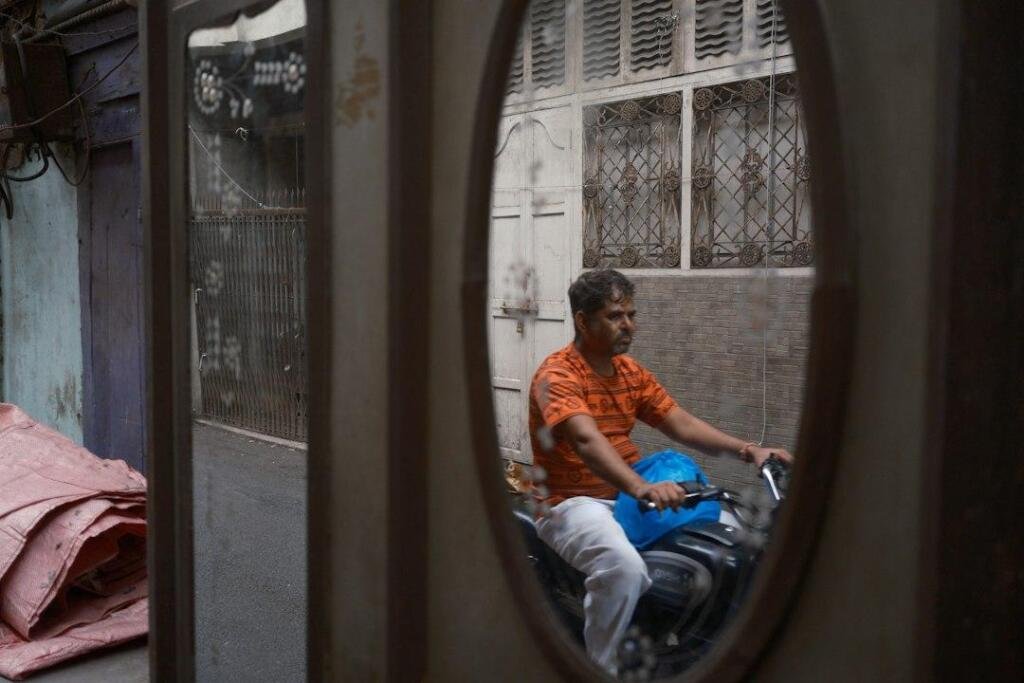
Featured image: Palak Pitroda via Unsplash. Image is illustrative and does not depict the person involved in the case.
Follow Buzz Content Corner
For more verified Surat news and explainers, follow Buzz Content Corner (BCC) on Instagram and Facebook.