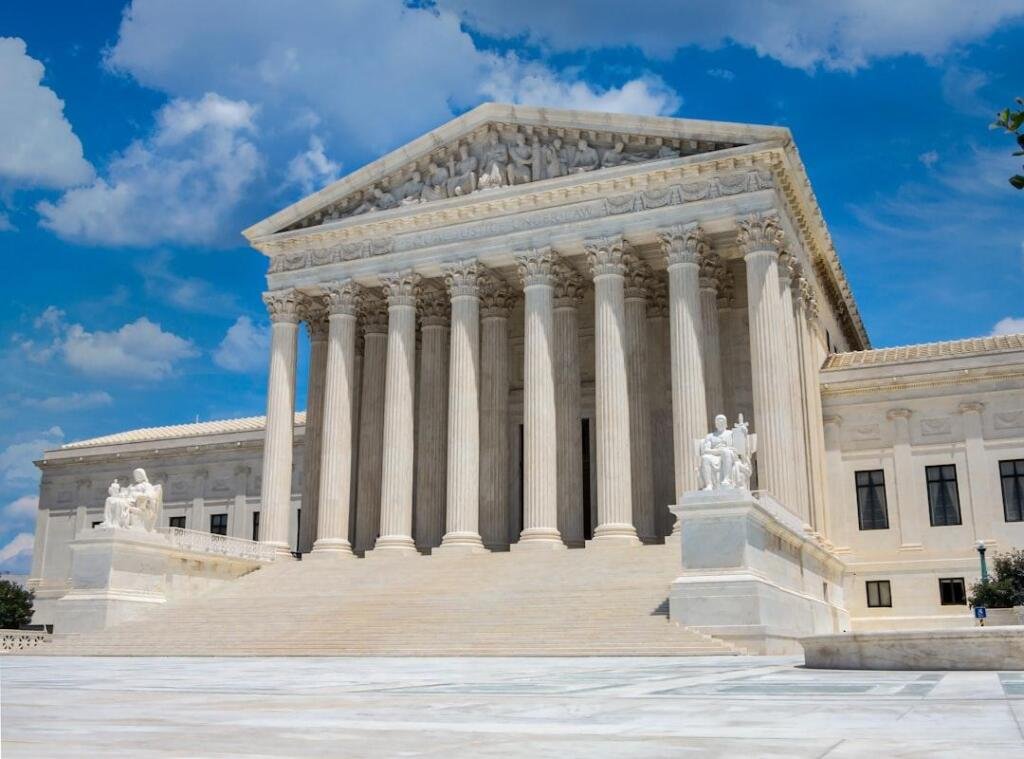
September 30, 2026: The U.S. Supreme Court is preparing to hear a closely watched dispute over whether Boulder County and the City of Boulder can pursue state-law climate claims against ExxonMobil and Suncor Energy.
The case has attracted attention because it sits at the intersection of climate policy, state tort law, federal environmental law and corporate liability. It is also important for a practical reason: similar lawsuits have been filed by state and local governments around the United States, so the Court’s treatment of the Boulder case could influence how other cases proceed.
Reuters reported on September 30 that Exxon and Suncor are asking the Supreme Court to block the Colorado case, arguing that claims over global greenhouse-gas emissions belong under federal law rather than state law. Boulder, meanwhile, argues that its lawsuit is based on state-law claims concerning alleged deception and local harms rather than an attempt to regulate worldwide emissions directly. You can read Reuters’ report on the dispute.
What is the Boulder climate lawsuit about?
Boulder County and the City of Boulder sued ExxonMobil and Suncor Energy over climate-related costs. The local governments say fossil-fuel producers should bear responsibility for some costs associated with climate change and allege that the companies misled the public about climate risks.
The oil companies dispute that theory and argue that litigation based on worldwide greenhouse-gas emissions cannot properly be governed by the law of one state. Their position is that federal law — including the Clean Air Act and federal principles governing interstate pollution — should displace or pre-empt the state claims.
Those are competing legal positions. The Supreme Court’s task is not to decide whether climate change exists or whether fossil fuels contribute to greenhouse-gas emissions. The legal question is about which body of law can govern the claims and whether the Colorado case may move forward in state court.
Why the jurisdiction question matters
Climate litigation is difficult because greenhouse gases do not stop at city or state borders. A ton of carbon dioxide emitted in one place becomes part of a global atmospheric system. That makes causation, jurisdiction and remedy unusually complicated.
The companies say this cross-border nature is exactly why state courts should not be allowed to impose liability based on global emissions. Boulder responds that its lawsuit does not ask a Colorado judge to set national emissions standards. Instead, it frames the claims around alleged deceptive conduct and costs experienced locally.
This distinction — regulation of emissions versus liability for alleged conduct — is likely to be central to the arguments.
What Exxon and Suncor are asking the Supreme Court to do
At a high level, Exxon and Suncor want the Court to prevent the Boulder claims from proceeding under Colorado law. Their arguments include the idea that global climate-related claims are inherently federal and that federal environmental legislation occupies the relevant field.
If the Supreme Court accepts a broad version of that argument, it could make it much harder for municipalities to pursue similar state-law climate cases. If the Court rejects it, more of those lawsuits could continue through state courts, where defendants would still be able to contest causation, damages and other issues on the merits.
What Boulder is arguing
Boulder’s position is that it is seeking compensation under traditional state-law theories and that the case is not a backdoor attempt to set nationwide environmental policy. Local officials have pointed to infrastructure and public costs they associate with climate impacts and say state courts are capable of hearing claims based on alleged corporate conduct.
That does not mean Boulder has already proved liability. Allowing a lawsuit to proceed is different from deciding that the plaintiffs will ultimately win. The current Supreme Court dispute is largely about whether the claims can be heard under the legal framework Boulder has chosen.
Justice Samuel Alito has recused himself
The Associated Press reported that Justice Samuel Alito stepped aside from the case after questions were raised about his holdings in oil-sector companies. AP noted that the Court did not publicly give a reason for the recusal, while also reporting that Alito has previously recused himself in matters involving companies in which he owns stock.
Read the Associated Press report on the recusal.
A recusal changes the number of justices participating in the case. It does not, by itself, indicate how the remaining justices will rule.
How this fits into the wider wave of climate litigation
State and local governments have increasingly used courts to seek compensation from fossil-fuel companies for alleged climate-related damage. The legal strategies vary, but many cases use state-law claims involving nuisance, consumer protection, failure to warn or alleged misrepresentation.
Energy companies have generally tried to move such cases into federal court or have them dismissed on the ground that global climate policy should be set by Congress and federal regulators rather than through state-by-state litigation.
That procedural fight has become almost as important as the underlying climate allegations. Before a court can decide damages or factual responsibility, it first has to decide whether the case belongs there at all.
Why this Supreme Court case could affect many other lawsuits
Reuters reported that roughly 60 comparable climate lawsuits have been filed by governments across the country. The cases are not identical, so one Supreme Court decision would not automatically resolve every lawsuit. But a broad ruling on federal pre-emption or state authority could provide a framework that lower courts would have to follow.
That is why both environmental groups and the energy industry are watching the Boulder dispute closely. The immediate parties are Colorado local governments and two companies, but the legal principles may travel much further.
What the Court is not being asked to decide
Public discussion around climate cases often becomes broader than the actual legal question. It helps to separate the issues.
- The Court is not deciding whether climate change is real.
- It is not setting a national carbon tax.
- It is not directly writing emissions limits for power plants or vehicles.
- It is not yet calculating damages owed to Boulder.
- It is deciding legal questions that determine whether and how state-law claims of this kind can proceed.
That narrower framing makes the dispute easier to understand and avoids turning a jurisdictional case into a referendum on every aspect of climate policy.
State law versus federal law: the core tension
Federalism disputes are common in the U.S. legal system. States traditionally control large areas of tort and consumer-protection law, while the federal government has authority over interstate commerce and major national regulatory schemes.
The difficult question is what happens when a state-law claim touches a problem that is inherently interstate or global. The oil companies say the global nature of greenhouse-gas emissions requires a federal answer. Boulder says traditional state remedies can coexist with federal regulation when the claim is focused on local injuries and alleged corporate conduct.
The Court’s reasoning on that boundary may matter well beyond climate litigation.
Why Supreme Court procedure matters as much as headlines
Supreme Court stories are often reduced to which side “won.” But major cases can be decided on narrow grounds. A ruling might focus on jurisdiction, pre-emption, pleading standards or another procedural issue without resolving the broadest policy arguments raised by either side.
BCC has covered this distinction in other high-profile court stories. Our explainer on the Supreme Court’s Trump insurrection-clause ruling looks at what the Court actually decided rather than treating the case as a broader judgment on every political question surrounding it.
Similarly, our report on the Perplexity-Amazon appeals dispute shows how procedural decisions can have immediate commercial consequences even before the underlying legal controversy is finally resolved.
What happens next?
The justices will hear arguments from the companies and the Colorado plaintiffs, with briefs from interested governments, industry groups and advocacy organisations helping frame the broader stakes. After argument, the Court may take months to issue a written opinion.
Until then, predictions should be treated cautiously. Questions at oral argument can reveal what concerns the justices are exploring, but they do not always predict the final vote or the breadth of the eventual opinion.
Frequently asked questions
Who is suing Exxon and Suncor?
Boulder County and the City of Boulder in Colorado are among the plaintiffs pursuing climate-related claims.
What do Exxon and Suncor want from the Supreme Court?
They are asking the Court to prevent the Colorado state-law climate claims from proceeding, arguing that the dispute is governed by federal law.
Has the Supreme Court ruled on the merits yet?
No. The case is being heard during the Court’s new term. The legal arguments and final opinion are still ahead.
Why did Justice Alito recuse?
The Court did not publicly state a reason. News reports have noted scrutiny of his financial interests in other oil companies. A recusal should not be treated as evidence about the merits of the case.
Could the case affect other climate lawsuits?
Yes. Depending on how broadly the Court rules, its reasoning could influence numerous state and local climate-liability cases around the country.
Sources and further reading
- Reuters — Facing climate lawsuits, Big Oil again turns to U.S. Supreme Court
- Associated Press — Alito steps aside in major climate case
Featured image: representative photograph of the U.S. Supreme Court from Unsplash.