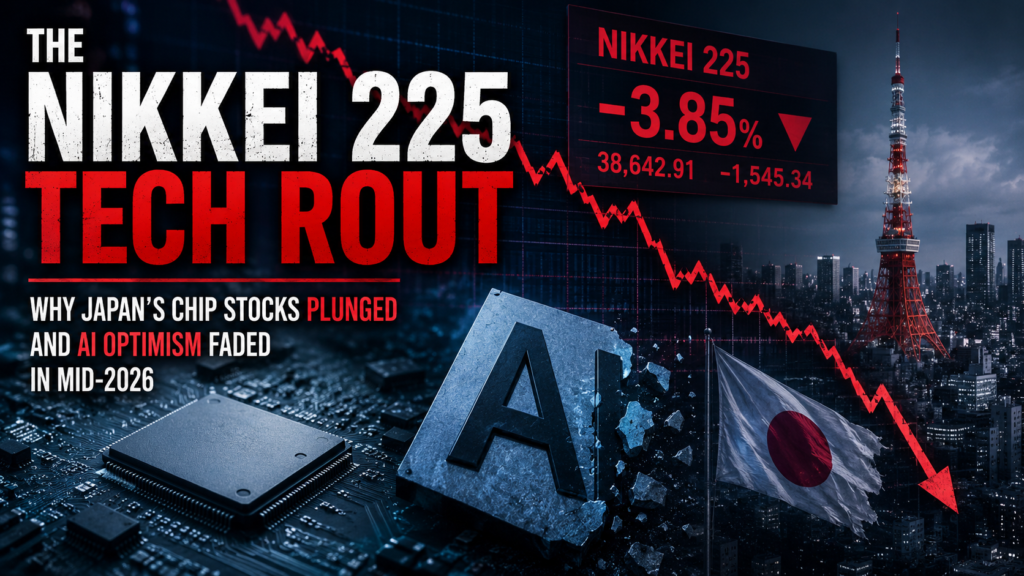
The Japanese stock market has experienced a historically volatile summer. Throughout late July and early August 2026, the benchmark Nikkei 225 index suffered a brutal, tech-led sell-off. Plunging more than 4% in single trading sessions and hitting two-month lows, the index was dragged down by an aggressive liquidation of semiconductor and artificial intelligence-related equities.
What exactly drove this sudden, sharp decline in one of Asia’s most critical financial markets? The answer requires looking beyond Tokyo. It is a story of global AI optimism colliding with the harsh realities of corporate capital expenditure, macroeconomic inflation pressures, and a massive reassessment of tech valuations on Wall Street.
1. The Global AI Reality Check: Capex Fatigue Sets In
For the past 18 months, “Artificial Intelligence” has been the magic phrase driving equity markets worldwide to record highs. Investors rewarded any company associated with AI infrastructure. However, by mid-2026, a significant sentiment shift occurred—what analysts are calling “Capex Fatigue.”
- Reassessing AI ROI: Investors began heavily scrutinizing the colossal capital expenditures (Capex) major tech companies (like Alphabet, Meta, and Microsoft) were pouring into AI infrastructure. The market started demanding hard evidence that these multi-billion-dollar investments would translate into near-term profitability and revenue growth. As these companies prepared to release earnings, cautious investors opted to take profits rather than risk disappointment.
- The Wall Street Ripple Effect: Japan’s market does not operate in a vacuum. Heavy losses on Wall Street—specifically the tech-heavy Nasdaq index and the VanEck Semiconductor ETF (which dropped nearly 4% in late July)—triggered a direct ripple effect in Tokyo. As U.S. institutional investors pulled back from American chip designers, they simultaneously liquidated correlated assets in Asia’s manufacturing and testing hubs.
2. The Casualties: Japan’s Semiconductor Heavyweights Bleed
The Nikkei 225 is heavily weighted with companies that supply the critical “picks and shovels” for the global tech and AI supply chains. When global tech sentiment sours, these specific Japanese companies bear the absolute brunt of the selling pressure.
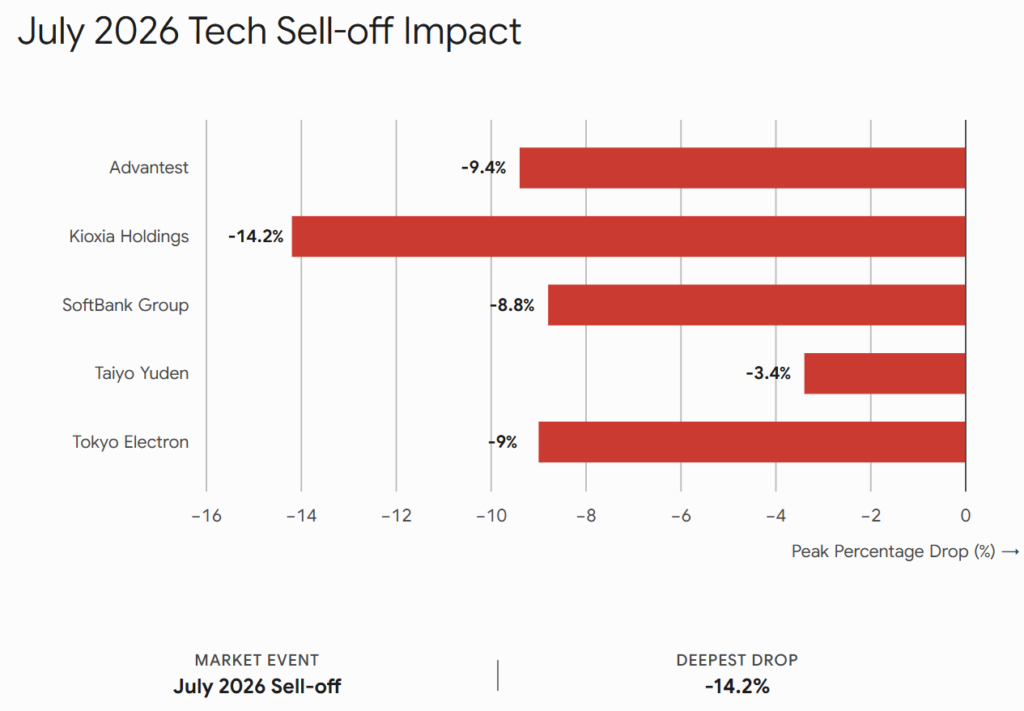
During the peak of the late July rout, the bleeding was concentrated in Japan’s semiconductor and tech-investment giants, wiping billions off their market capitalizations in days:
- Tokyo Electron (Down 9%): A major global manufacturer of semiconductor production equipment, Tokyo Electron saw massive liquidations as investors worried about a potential slowdown in the global chip equipment spending cycle.
- Advantest (Down 9.4%): As a key supplier of automated chip-testing equipment—and a company closely tied to Nvidia’s supply chain—Advantest was hammered by the broader panic surrounding AI chip demand.
- SoftBank Group (Down 8.8%): The tech investment behemoth, heavily exposed to global technology startups and AI ventures (including Arm Holdings), suffered immensely as the overarching “growth at all costs” narrative faded.
- Kioxia Holdings (Down 14%+): The memory chipmaker suffered a catastrophic drop, exacerbated by a federal jury in Texas ordering the company to pay $229 million in damages for patent infringement, perfectly timing with the broader market panic.
Explore the comparative impact on these key semiconductor and tech stocks during the peak of the sell-off:
3. Macro Pressures: The Bank of Japan and Geopolitics
While the tech sector was the primary catalyst, domestic macroeconomic factors in Japan, combined with global geopolitical stress, poured gasoline on the fire.
- Rising Inflation and the BOJ: Data released concurrently with the sell-off showed Japan’s headline inflation rising, hitting its highest levels in six months. This reinforced market expectations that the Bank of Japan (BOJ) would have to proceed with further interest rate hikes. Higher interest rates make borrowing more expensive for growth-oriented tech companies, fundamentally compressing their valuations.
- Currency Volatility: The yen has been historically weak, but whispers of BOJ rate hikes caused sudden currency fluctuations. A rapidly strengthening yen hurts the profit margins of Japan’s massive export-driven tech companies when they repatriate overseas earnings.
- Middle East Tensions: Adding to the “risk-off” environment, global geopolitical tensions flared up. The US military reported intercepting attacks targeting troops in the Middle East, which pushed global oil prices higher. In times of global uncertainty and rising energy costs, investors typically flee volatile tech equities for safer assets like bonds or defensive consumer staples.
4. Looking Ahead: A Bubble Bursting or a Valuation Reset?
Is this the end of the AI boom? Most institutional analysts do not think so.
The deep sell-off in the Nikkei 225 was a confluence of over-extended valuations meeting macroeconomic reality. While painful for short-term traders, many analysts view this as a necessary valuation reset. The underlying, long-term demand for semiconductors—driven by cloud computing, the transition to electric vehicles, and future AI data centers—remains exceptionally strong. The market is simply moving from a phase of “blind optimism” to a phase of “show me the profits.”
People Also Ask (Q&A)
Here are the most searched questions on Google regarding the Nikkei 225 and the global tech stock plunge:
Q: Why does the US tech market affect the Nikkei 225 so heavily?
A: The global technology supply chain is deeply integrated. Japan dominates the market for the specialized chemicals, wafers, and machinery required to build microchips. If U.S. tech giants (like Nvidia, AMD, or Apple) face slowing growth or reduce their capital expenditure, it directly and immediately impacts the future revenues of Japanese suppliers like Tokyo Electron and Advantest.
Q: Are AI stocks a bubble that is currently bursting?
A: Analysts are divided. Some believe the massive run-up in AI stocks constituted a classic bubble that is now correcting itself. Others argue this is a healthy, temporary pullback. Unlike the Dot-com bubble of 2000, today’s AI leaders possess massive, highly profitable core businesses and stronger profit margins, suggesting this is a reset of expectations rather than a fundamental collapse.
Q: What is the Bank of Japan’s role in this market drop?
A: Japan has maintained ultra-low interest rates for decades to fight deflation. Now that inflation is rising, the BOJ is under pressure to hike rates. Higher interest rates typically hurt stock markets—especially growth and tech stocks—because they increase corporate borrowing costs and make safer, yield-bearing investments (like government bonds) more attractive to investors.
Q: Will semiconductor stocks recover?
A: Historically, the semiconductor industry is highly cyclical—it goes through periods of massive boom and sharp bust based on inventory levels and upgrade cycles. While current sentiment is cautious due to high valuations, the structural long-term demand for advanced chips remains intact. Recovery will likely depend on the upcoming earnings reports from major hyperscalers (like Amazon, Alphabet, and Microsoft) confirming continued AI infrastructure spending.
Q: How did other Asian markets react to the sell-off?
A: The panic was regional. South Korea’s KOSPI plunged over 10% from its record highs, dragged down by memory giants Samsung Electronics and SK Hynix (both dropping 13-14%). Taiwan’s TAIEX also saw steep declines, driven by a drop in TSMC, proving that the semiconductor sell-off was a pan-Asian event.
For more Updates, visit: Buzz Content Corner
Follow us on
Facebook: https://www.facebook.com/Buzzcontentcorners/
Instagram: https://www.instagram.com/buzzcontentcorner