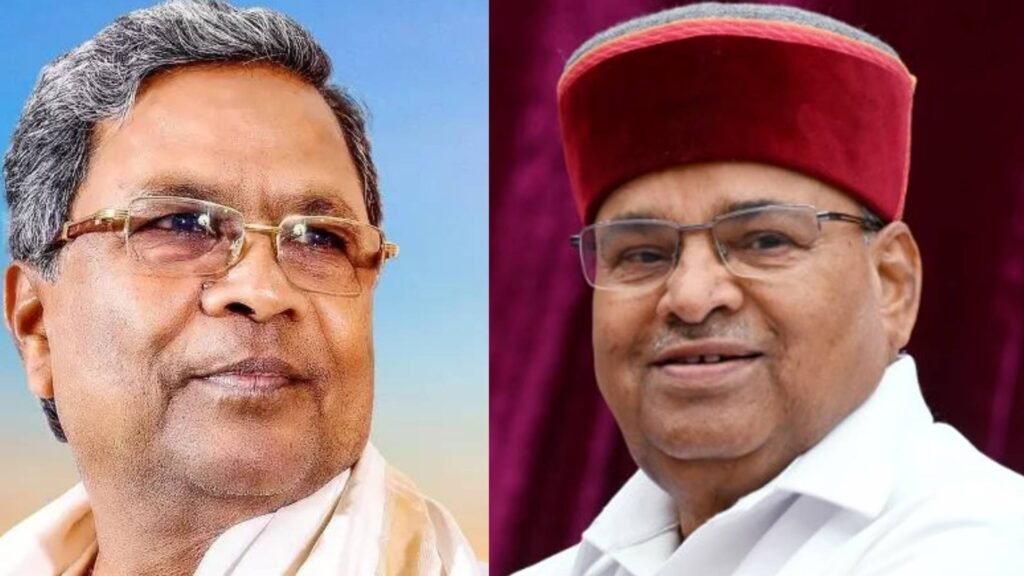
The Karnataka temple bill controversy became a major political and constitutional debate in 2024 after the Congress-led state government proposed changes to how certain higher-income Hindu religious institutions contribute to a Common Pool Fund.
The proposal was widely described in political debate and media coverage as a “temple tax bill.”
That description, however, can be misleading.
The Karnataka Hindu Religious Institutions and Charitable Endowments (Amendment) Bill, 2024 did not propose a new general tax on all temples or a tax intended simply to move temple revenue into the state’s ordinary treasury.
Instead, it proposed revised mandatory contributions from specified notified or declared Hindu religious institutions to an existing Common Pool Fund administered under Karnataka’s Hindu religious institutions law.
The Bill then became caught in a wider legal dispute involving the Karnataka Governor, the state government, the Constitution and an existing Supreme Court case concerning the validity of the underlying law.
By 2025, Governor Thaawarchand Gehlot had reserved the Bill for Presidential consideration.
Here is what the Bill actually proposed, why it became controversial and where the matter stands.
What Was the Karnataka Temple Bill?
The formal name was:
The Karnataka Hindu Religious Institutions and Charitable Endowments (Amendment) Bill, 2024.
It sought to amend the Karnataka Hindu Religious Institutions and Charitable Endowments Act, 1997.
According to the Bill’s official Statement of Objects and Reasons, the amendments were intended to:
- increase the Common Pool Fund;
- include expertise in Hindu temple architecture and sculpture in management committees;
- create district- and state-level committees for construction, maintenance and pilgrim safety at Group-A temples; and
- make related administrative changes.
The complete legislative text is available from the Karnataka Legislature. Official Karnataka Hindu Religious Institutions and Charitable Endowments Amendment Bill, 2024
What Did the Bill Propose Temples Would Pay?
This is one of the most important parts of the controversy.
The Bill proposed:
| Annual Gross Income | Proposed Contribution |
|---|---|
| More than ₹1 crore | 10% of gross income |
| More than ₹10 lakh and up to ₹1 crore | 5% of gross income |
The official legislative text specifically uses gross income for these proposed new contribution levels.
That represented a change from the earlier Section 17 structure, under which contributions were calculated on net income and applied at lower income thresholds:
- 10% of net income for institutions with gross annual income above ₹10 lakh;
- 5% of net income for institutions with gross annual income above ₹5 lakh but not exceeding ₹10 lakh.
So the 2024 proposal did more than simply raise or lower a percentage.
It changed both:
the income thresholds and the basis from net income to gross income.
Was This Really a “Temple Tax”?
Calling it a “temple tax” is politically common but legally imprecise.
The Bill itself describes the payments as contributions to a Common Pool Fund under the Hindu Religious Institutions and Charitable Endowments Act.
The Common Pool Fund already existed under Section 17 of the law.
Karnataka government information currently describes the Common Pool Fund as being generated through contributions from qualifying temples and then used for development of other temples through the State Dharmika Parishath.
So a more neutral description is:
a proposed increase and restructuring of contributions from higher-income state-regulated Hindu institutions to the Common Pool Fund.
That avoids adopting either the government’s or opposition’s political language as fact.
What Was the Common Pool Fund Supposed to Be Used For?
The Bill proposed that Common Pool resources could support notified Category-C religious institutions that had low income or were in needy circumstances.
The Karnataka government also argued during the debate that the amendments would support measures including:
- maintenance and improvement of low-income temples;
- welfare of archakas, or priests;
- insurance and death-relief measures;
- assistance to families of temple employees.
The government said the objective was essentially to move part of the resources of wealthier Hindu institutions toward poorer Hindu institutions rather than divert those funds to other religions.
This distinction matters because the proposal concerned a statutory Common Pool Fund for specified religious and temple-related purposes, not unrestricted general state spending.
Why Did the BJP Oppose the Bill?
The BJP strongly opposed the proposal.
Its leaders argued that the Congress government was targeting Hindu temple revenue and questioned why the state should take a larger share of income from Hindu religious institutions.
BJP state president B. Y. Vijayendra publicly accused the government of seeking to take money from Hindu temples and questioned why comparable measures were not being imposed on institutions of other religions.
The Congress government rejected that characterization.
Chief Minister Siddaramaiah said the proposal was about taking a portion from wealthier Hindu temples and using it to assist poorer Hindu temples, not transferring the money to churches, mosques or other religious institutions.
For an accurate article, both positions should be identified as political arguments, rather than one side’s claim being presented as an established fact.
The Bill Was Initially Defeated in the Legislative Council
The Bill’s legislative history was unusually complicated.
It first passed the Karnataka Legislative Assembly, where the Congress had a majority.
But on February 23, 2024, the BJP-JD(S) opposition defeated it in the Legislative Council, where the opposition held an advantage.
The Karnataka Legislature’s own records note that Bill No. 11 of 2024 was rejected in the Council on February 23 before being taken up again.
The government did not abandon it.
Karnataka Passed the Bill Again
The Assembly reconsidered and passed the legislation again.
On February 29, 2024, the Bill was eventually passed by both Houses after being reconsidered.
That meant the next major constitutional step was obtaining the Governor’s assent.
This is where the current BCC article becomes particularly inaccurate.
Did Governor Gehlot Simply “Refuse to Sign” the Bill?
Not exactly.
In March 2024, Governor Thaawarchand Gehlot returned the Bill seeking clarification.
Contemporary reporting said one of his key concerns was that the underlying Karnataka Hindu Religious Institutions and Charitable Endowments Act had been the subject of constitutional litigation.
A Karnataka High Court ruling had earlier struck down important aspects of the law, and the matter was already before the Supreme Court.
The Governor sought clarification on whether further amendments should be made while that litigation remained unresolved.
Therefore the headline:
“Governor refuses to sign temple tax bill”
oversimplifies the constitutional process.
A more precise description is:
The Governor returned the Bill for clarification and later reserved it for the President’s consideration.
What About the “Why Only Hindu Temples?” Question?
Some reporting indicated that the Governor also sought clarification regarding treatment of religious institutions and whether comparable provisions existed for other religions.
But the current BCC article presents this as though it were the Governor’s single decisive reason for rejecting the legislation:
“Why are only Hindu temples being taxed?”
That is too simplistic.
The later and more significant constitutional concern focused on the pending litigation over the underlying Act and scrutiny under constitutional protections including Articles 14 and 26. When Gehlot eventually reserved the Bill for the President, his order specifically cited those unresolved constitutional issues.
Why Was the Existing Karnataka Temple Law Already in Court?
The controversy predates the 2024 amendment.
The Karnataka Hindu Religious Institutions and Charitable Endowments Act, 1997 has been challenged in litigation concerning the state’s power to regulate Hindu religious institutions and constitutional protections involving equality and religious administration.
The Karnataka High Court had previously found aspects of the legislation unconstitutional.
The matter subsequently reached the Supreme Court, which stayed the High Court’s decision while the appeals remained pending.
This existing litigation became directly relevant when the state attempted to amend the same statutory structure in 2024.
What Happened During 2024 and 2025?
The legislation remained stalled after the Governor sought clarification.
In September 2024, it was still among Bills for which the Governor had not granted assent.
The Karnataka government later resubmitted the Bill with clarifications.
According to the Governor’s 2025 order, the amendment was submitted again on May 16, 2025.
But the Governor remained unconvinced that he should personally grant assent while the constitutional dispute remained before the Supreme Court.
Governor Sends the Bill to the President
In May 2025, Governor Gehlot formally reserved the Bill for consideration of the President of India.
He cited Articles 200 and 201 of the Constitution, which deal with the Governor’s handling of state Bills and Bills reserved for Presidential consideration.
The Governor said that because the underlying legal questions were subject to constitutional scrutiny, he considered Presidential review the more appropriate route.
That is very different from saying:
“The Governor rejected the temple bill.”
Once reserved, the Bill’s fate shifted to the Presidential assent process.
Latest Status: Did the Karnataka Temple Bill Become Law?
This needs cautious wording because the matter has continued through a complicated constitutional process.
The latest publicly verifiable reporting I found continued to list the Karnataka Hindu Religious Institutions and Charitable Endowments (Amendment) Bill, 2024 among Bills awaiting Presidential assent after referral to the Centre in 2025.
I found no subsequent official enactment record establishing that this particular 2024 Common Pool Fund amendment has received Presidential assent and entered into force.
So the safest current wording is:
The 2024 Common Pool Fund amendment had been reserved for Presidential consideration and had not been shown in the latest verifiable records reviewed here as having become law.
Do not write that the President “rejected” it unless an official later decision establishes that.
Supreme Court Development in 2026
There was another important legal development in April 2026.
The Supreme Court had been considering appeals concerning the validity of Karnataka’s underlying Hindu religious institutions law.
A two-judge bench had earlier reserved judgment.
But it subsequently recalled that order and decided to await the outcome of the larger Sabarimala reference, because the Sabarimala proceedings involve broader constitutional questions about the state’s authority over religious affairs.
This means the constitutional issues that concerned the Governor have themselves remained part of an unresolved Supreme Court process.
That context is important when explaining why the 2024 amendment became stalled.
Do Not Confuse This With the 2025 Amendment
Karnataka later passed another amendment concerning the same Hindu Religious Institutions and Charitable Endowments Act.
The 2025 Bill, enacted as Karnataka Act 02 of 2026, dealt with discriminatory eligibility provisions involving people affected by leprosy and people who are deaf or mute.
That is not the same legislation as the controversial 2024 Common Pool Fund proposal.
Therefore, the existence of a 2026 amendment to the temple law does not mean the controversial 2024 revenue-contribution Bill received assent.
Karnataka Temple Bill Timeline
| Date | Development |
|---|---|
| Feb. 2024 | Amendment introduced |
| Feb. 2024 | Assembly passes Bill |
| Feb. 23, 2024 | Legislative Council initially rejects it |
| Feb. 29, 2024 | Bill eventually passes both Houses after reconsideration |
| March 2024 | Governor returns it seeking clarification |
| 2024 | Bill remains without assent |
| May 16, 2025 | Karnataka government resubmits Bill |
| May 2025 | Governor reserves it for President |
| 2025 | Reported as pending Presidential assent |
| April 2026 | Supreme Court defers underlying temple-law judgment pending Sabarimala reference |
| 2026 | No verified enactment of the 2024 Common Pool Fund amendment located |
What the Bill Proposed — and What It Did Not
| Claim | More Accurate Explanation |
|---|---|
| “All temples would be taxed” | No. Contributions applied to specified higher-income notified/declared institutions |
| “10% tax on every temple” | No. 10% proposed for institutions with gross annual income above ₹1 crore |
| “5% tax on every smaller temple” | No. 5% proposed for institutions above ₹10 lakh and up to ₹1 crore |
| “Money would go to general state spending” | The Bill placed contributions in a Common Pool Fund for specified religious/temple purposes |
| “Governor rejected the Bill” | He returned it for clarification and later reserved it for the President |
| “Governor’s only concern was other religions” | No. Pending constitutional litigation over the underlying Act was a major issue |
| “The Bill is definitely law now” | No verified enactment of this specific 2024 amendment was located |
Frequently Asked Questions
What is the Karnataka temple bill?
It is the Karnataka Hindu Religious Institutions and Charitable Endowments (Amendment) Bill, 2024, which proposed changes to contributions made by certain higher-income Hindu religious institutions to a Common Pool Fund.
Was Karnataka imposing a 10% tax on every temple?
No. The Bill proposed a 10% contribution from institutions with gross annual income above ₹1 crore.
What was proposed for temples earning between ₹10 lakh and ₹1 crore?
A contribution of 5% of gross income.
Where was the money supposed to go?
Into the Common Pool Fund administered under Karnataka’s Hindu religious institutions framework, including support for needy Category-C institutions and temple-related welfare measures.
Did the Governor reject the Bill?
Not in the simple sense suggested by the old article. He initially returned it seeking clarification and later reserved it for Presidential consideration.
Why did the Governor have concerns?
A major concern was that the validity of the underlying Karnataka temple law was already involved in constitutional litigation before the Supreme Court.
Did the President approve the Karnataka temple bill?
The latest verifiable material reviewed here continued to describe the 2024 Bill as pending Presidential assent. I found no later official enactment establishing that this specific Common Pool Fund amendment had become law.
What happened in the Supreme Court in 2026?
The Supreme Court decided to await the outcome of the broader Sabarimala constitutional reference before deciding the appeals concerning Karnataka’s underlying temple law.
Final Takeaway
The Karnataka temple bill controversy is more complicated than the phrase “government taxes temples” suggests.
The state already had a Common Pool Fund system.
The 2024 amendment sought to restructure contributions by requiring:
10% of gross income from certain institutions earning above ₹1 crore, and
5% from those earning more than ₹10 lakh but up to ₹1 crore.
The Congress government argued that the increased pool would help poorer Hindu temples, priests and related temple welfare.
The BJP and JD(S) opposed the proposal, arguing that it placed an unfair financial burden on Hindu institutions and questioning the state’s approach to temple revenue.
Governor Thaawarchand Gehlot did not simply refuse the Bill because other religions were excluded.
His actions were tied substantially to unresolved constitutional litigation involving Karnataka’s existing Hindu religious institutions law.
After initially returning the Bill for clarification, he ultimately reserved it for Presidential consideration in May 2025.
The legal background also remains unresolved. In April 2026, the Supreme Court deferred its decision on Karnataka’s underlying temple legislation while awaiting the outcome of the wider Sabarimala constitutional reference.
Therefore, the most accurate current description is not:
“Governor rejected Karnataka’s temple tax.”
It is:
“Karnataka passed a controversial amendment restructuring temple Common Pool Fund contributions, the Governor raised constitutional concerns and ultimately reserved the Bill for Presidential consideration.”
For more political coverage, visit Buzz Content Corner Politics.
Also read The Tax Debate: Should Hindu Temples Be Singled Out?.