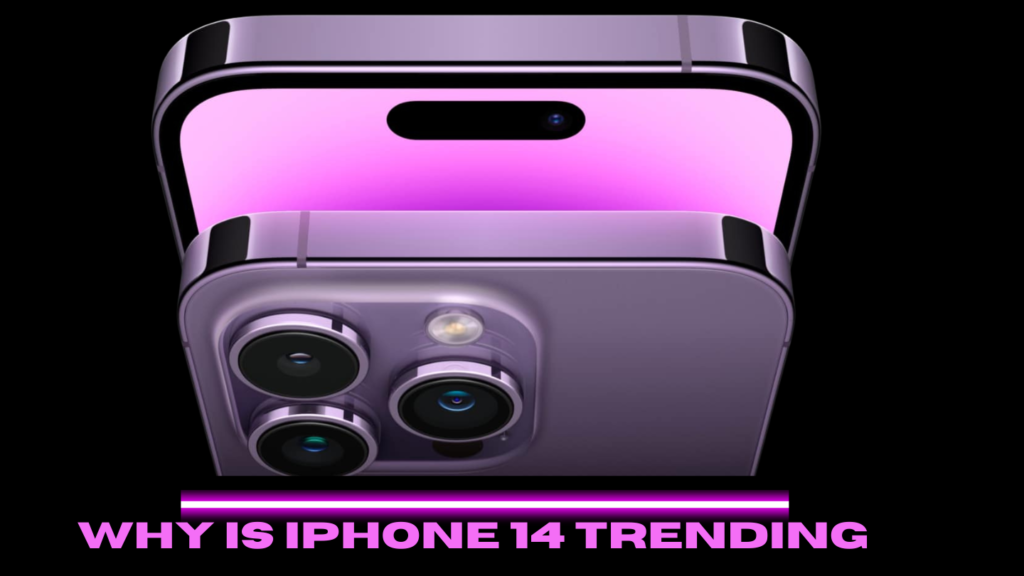
The iPhone 14 in 2026 occupies an interesting position.
It was launched in September 2022, so it is no longer a current-generation iPhone. Apple now sells newer models including the iPhone 17 series, iPhone 17e and iPhone 16 directly through its Indian online store. The iPhone 14 is no longer part of Apple’s current retail lineup in India.
That does not automatically make the iPhone 14 obsolete.
It still has a capable A15 Bionic processor, a good OLED display, reliable cameras, 5G, MagSafe, Crash Detection and continued iOS support.
Most importantly, Apple has officially confirmed that the iPhone 14 will support iOS 27, which is scheduled for release later in 2026.
But there are also meaningful compromises compared with newer iPhones.
So is the iPhone 14 still worth buying?
The answer depends heavily on its price, battery condition and what features you actually need.
iPhone 14 Key Specifications
| Feature | iPhone 14 |
|---|---|
| Launch year | 2022 |
| Display | 6.1-inch Super Retina XDR OLED |
| Resolution | 2532 × 1170 pixels |
| Refresh rate | 60Hz |
| Processor | A15 Bionic |
| Main camera | 12MP |
| Ultra Wide | 12MP |
| Front camera | 12MP TrueDepth |
| Video | Up to 4K Dolby Vision at 60 fps |
| Storage | 128GB / 256GB / 512GB |
| Water resistance | IP68 |
| Connector | Lightning |
| MagSafe | Up to 15W |
| Software | iOS 26; iOS 27 compatible |
| Apple Intelligence | No |
Apple’s official technical specifications confirm the 6.1-inch OLED display, A15 Bionic chip, dual 12MP cameras, IP68 rating and storage choices. View the official iPhone 14 specifications.
The A15 Bionic Is Old, but Still Capable
The iPhone 14 uses Apple’s A15 Bionic chip.
It includes:
- 6-core CPU
- 5-core GPU
- 16-core Neural Engine
The same chip architecture powered Apple’s earlier flagship devices, and for ordinary use it remains more than capable.
Activities such as:
- YouTube
- Safari
- banking apps
- navigation
- video streaming
- photo editing
- casual gaming
are unlikely to make the iPhone 14 feel unusably slow.
This is one of the main reasons the phone continues to have practical life several years after launch.
However, buyers should not confuse “still fast” with “equal to a modern flagship.”
Newer chips provide better efficiency, graphics capabilities and support for newer AI functions.
iPhone 14 Will Support iOS 27
Software support is one of the strongest arguments in favour of keeping or buying an iPhone 14.
Apple currently lists the iPhone 14 among the devices compatible with iOS 26, including current iOS 26.5.
More importantly, Apple’s official iOS 27 preview also lists:
- iPhone 14
- iPhone 14 Plus
- iPhone 14 Pro
- iPhone 14 Pro Max
as compatible devices.
You can check the official compatibility list on Apple’s iOS 27 page.
That means a phone originally released in 2022 will continue receiving Apple’s next major operating-system generation in late 2026.
For buyers considering a used or refurbished iPhone, continued software support is extremely important.
But iPhone 14 Does Not Support Apple Intelligence
This is probably the largest limitation in 2026.
Apple Intelligence is not supported on the standard iPhone 14.
Apple currently lists supported iPhones beginning with:
- iPhone 15 Pro and 15 Pro Max
- iPhone 16 family
- iPhone 17 family
- iPhone Air
and newer compatible devices. The iPhone 14 is absent from Apple’s compatibility list.
See Apple’s official Apple Intelligence compatibility information.
This matters because Apple is increasingly building new features around AI.
So although the iPhone 14 receives iOS 27, it will not receive every feature available in iOS 27.
That distinction is important:
iOS 27 compatible does not mean every iOS 27 feature is supported.
If Apple’s newer AI tools are a major reason for buying an iPhone, I would not choose the iPhone 14 in 2026.
The 6.1-Inch OLED Display Still Looks Good
The iPhone 14 uses a 6.1-inch Super Retina XDR OLED display with:
- 2532 × 1170 resolution
- 460 pixels per inch
- HDR
- True Tone
- P3 wide colour
- 800 nits typical maximum brightness
- up to 1,200 nits HDR peak brightness
according to Apple’s specifications.
For:
- Netflix
- YouTube
- photographs
- social media
- web browsing
- everyday apps
the display still looks excellent.
But there is one major weakness.
The Display Is Only 60Hz
The standard iPhone 14 uses a 60Hz refresh rate.
That is increasingly difficult to ignore in 2026.
Many Android phones — including mid-range models — offer 90Hz or 120Hz screens, and Apple’s newer iPhone 17 also offers ProMotion technology.
A higher refresh rate makes:
- scrolling
- animations
- app transitions
- gaming
feel smoother.
A 60Hz iPhone is not unusable, but buyers coming from a 120Hz phone may notice the difference immediately.
This is one reason I would not recommend paying a premium price for an iPhone 14 today.
For a broader comparison of what matters when buying a phone, read our complete smartphone buying guide for 2026.
Camera Quality Remains One of Its Strengths
The iPhone 14 includes two rear cameras:
12MP Main camera
- f/1.5 aperture
- sensor-shift optical image stabilization
- Photonic Engine
- Deep Fusion
- Night mode
12MP Ultra Wide
- 120-degree field of view
- f/2.4 aperture
Apple also includes a 12MP TrueDepth front camera with autofocus.
These specifications may look modest compared with modern phones advertising 48MP, 50MP or even 200MP cameras.
But megapixels alone do not determine image quality.
The iPhone 14 can still produce reliable:
- daylight photographs
- portraits
- social-media images
- family photos
- night shots
- videos
particularly for users who prefer consistent point-and-shoot results.
Video Is Still Very Good
Video remains one of the iPhone 14’s stronger areas.
It supports:
- 4K video up to 60 fps
- Dolby Vision HDR up to 4K 60 fps
- Cinematic mode up to 4K HDR 30 fps
- Action mode up to 2.8K 60 fps
- sensor-shift stabilization
according to Apple’s official specifications.
For:
- Instagram Reels
- YouTube Shorts
- family videos
- casual content creation
the iPhone 14 remains capable.
Its limitations become more noticeable if you want newer professional camera features, high-resolution sensors or more advanced zoom capabilities.
No Telephoto Camera
The standard iPhone 14 has:
- Main
- Ultra Wide
but no dedicated telephoto camera.
Apple lists 2x optical zoom out from the Ultra Wide perspective and digital zoom up to 5x, but it does not offer the dedicated optical telephoto capabilities found on Pro models.
If you frequently photograph:
- concerts
- wildlife
- sports
- distant subjects
a newer phone with a stronger telephoto system may make more sense.
Battery Life: Check Battery Health, Not Just Original Specifications
When new, Apple rated the iPhone 14 for:
- up to 20 hours video playback
- up to 16 hours streamed video
- up to 80 hours audio playback
and it supports fast charging plus MagSafe wireless charging.
Those specifications describe a device in proper battery condition.
A used iPhone 14 purchased in 2026 may already be three or four years old.
That makes battery health much more important than the original battery specification.
Before buying a used device, check:
Settings → Battery → Battery Health
A substantially degraded battery can reduce daily runtime and may make replacement necessary.
When comparing two used iPhone 14 units, I would generally prefer the phone with:
- better battery health
- clean repair history
- original components
- proper warranty
even if it costs slightly more.
MagSafe Is Still Useful
The iPhone 14 supports MagSafe wireless charging up to 15W and standard Qi wireless charging up to 7.5W.
MagSafe also supports accessories such as:
- magnetic chargers
- wallets
- stands
- mounts
- battery accessories
The ecosystem remains one of the phone’s useful advantages.
Lightning Is Now a Major Disadvantage
The iPhone 14 still uses Apple’s Lightning connector.
Most current smartphones have moved to USB-C.
Apple’s newer iPhones also use USB-C.
That means an iPhone 14 owner may need to keep a separate Lightning cable while newer:
- iPhones
- Android phones
- laptops
- tablets
- accessories
increasingly share USB-C.
If you already own Lightning accessories, this may not bother you.
For someone buying fresh in 2026, however, USB-C is more convenient and future-friendly.
IP68 Water and Dust Resistance
The iPhone 14 carries an IP68 rating under IEC 60529.
Apple tested it to a maximum depth of 6 metres for up to 30 minutes under controlled laboratory conditions.
However, Apple specifically warns that water resistance is not permanent and can decrease with normal wear.
This becomes particularly important when purchasing an older or refurbished device.
A three-year-old phone should not automatically be assumed to retain exactly the same water resistance it had when new.
Crash Detection Remains Supported
The iPhone 14 introduced Crash Detection.
If the device detects a severe car crash, it can display an alert and attempt to contact emergency services if the user does not respond.
More information is available from Apple’s official Crash Detection guide.
This remains a useful safety feature in 2026.
What About Emergency SOS via Satellite?
The iPhone 14 hardware supports Apple’s satellite features.
However, availability depends on the country or region.
As of September 2026, Apple’s Emergency SOS via satellite service is available in selected countries including the United States, Canada, United Kingdom, Australia, Japan and several European markets.
India is not currently listed among Apple’s supported Emergency SOS via satellite regions.
This is important because an Indian buyer should not purchase the iPhone 14 assuming Apple’s satellite emergency service will necessarily work locally.
You can check the current country list on Apple’s Emergency SOS via satellite support page.
Apple No Longer Sells the iPhone 14 Directly in India
This is another major difference between 2024 and 2026.
Apple India’s current online store lists:
- iPhone 17 Pro
- iPhone Air
- iPhone 17
- iPhone 17e
- iPhone 16 / 16 Plus
but not the iPhone 14.
That does not mean you cannot buy one.
You may still find iPhone 14 inventory through:
- third-party retailers
- refurbished-device sellers
- used-device marketplaces
but pricing, warranty and stock condition will vary.
Because of that, there is no single price at which the iPhone 14 is automatically a good deal.
iPhone 14 vs Newer iPhones in 2026
The biggest differences are easier to understand in a table.
| Feature | iPhone 14 | Newer iPhones |
|---|---|---|
| A15 performance | Still good | Faster chips |
| OLED display | Yes | Yes |
| Refresh rate | 60Hz | Some current models offer ProMotion |
| Main camera | 12MP | Newer 48MP systems |
| USB-C | No | Yes |
| Lightning | Yes | No |
| Apple Intelligence | No | Supported on eligible newer models |
| iOS 27 | Yes | Yes |
| MagSafe | Yes | Yes on compatible models |
| Crash Detection | Yes | Yes |
| Apple Store availability | Discontinued | Current models available |
The iPhone 14 therefore remains functional, but its limitations are now much easier to see.
Who Should Buy an iPhone 14 in 2026?
The iPhone 14 can still make sense if:
- you find it at a significant discount
- battery health is good
- you prefer iOS
- you do not care about Apple Intelligence
- 60Hz does not bother you
- you already use Lightning accessories
- basic wide and ultrawide cameras are enough
- you want a lower-cost entry into the Apple ecosystem
For these users, the phone can still offer several years of practical use.
Who Should Skip It?
I would consider a newer model if:
- you want Apple Intelligence
- you want USB-C
- you care about high-refresh-rate displays
- you need stronger cameras
- you want maximum future software life
- the iPhone 14 is priced too close to a newer model
That final point is especially important.
An old flagship is only good value when the price reflects its age.
If an iPhone 14 costs only slightly less than a significantly newer iPhone, saving a small amount today may not justify giving up newer hardware and a longer useful life.
Buying a Used iPhone 14: What to Check
If buying second-hand or refurbished, check these items before paying:
Battery health
Look at:
Settings → Battery → Battery Health
IMEI and activation status
Make sure the phone is not:
- reported lost
- carrier blocked
- Activation Locked
Face ID
Confirm Face ID works correctly.
Cameras
Test:
- Main camera
- Ultra Wide
- front camera
- video
- autofocus
Display
Check for:
- dead pixels
- discoloration
- touch problems
- aftermarket replacement warnings
Parts and Service History
On supported iOS versions, go to:
Settings → General → About
and check Parts and Service History if displayed.
Charging
Test both:
- Lightning
- wireless/MagSafe charging
Speakers and microphones
Make a call and record a short video.
A cheap used iPhone becomes expensive very quickly if it needs a new screen, battery and camera immediately after purchase.
Frequently Asked Questions
Is the iPhone 14 still good in 2026?
Yes, for everyday use. Its A15 Bionic processor, OLED screen, camera system and iOS support remain capable. Whether it is a good purchase depends mainly on price and battery condition.
Will iPhone 14 get iOS 27?
Yes. Apple officially lists the iPhone 14 among devices compatible with iOS 27.
Does iPhone 14 support Apple Intelligence?
No. Apple Intelligence requires newer supported hardware, beginning with models such as the iPhone 15 Pro series and later eligible iPhones.
Does iPhone 14 have USB-C?
No. It uses a Lightning connector.
Is the iPhone 14 display 120Hz?
No. The standard iPhone 14 uses a 60Hz display.
Does Apple still sell iPhone 14?
It is no longer listed among the iPhones Apple currently sells directly through its Indian online store.
Is a used iPhone 14 worth buying?
It can be, especially when the price is substantially lower than newer models and battery health, Face ID, cameras and repair history are all good.
Final Verdict: Is iPhone 14 Worth Buying in 2026?
The iPhone 14 is no longer a phone that “reigns supreme.”
That wording made more sense when the original article was published in March 2024.
In 2026, the market has moved on.
Newer iPhones provide:
- USB-C
- faster processors
- better cameras
- newer display technology
- Apple Intelligence support
- longer remaining hardware life
and Apple no longer sells the iPhone 14 directly in its current Indian lineup.
But calling the iPhone 14 obsolete would also be wrong.
It still offers:
- strong A15 Bionic performance
- a good OLED display
- reliable cameras
- excellent video recording
- MagSafe
- IP68 resistance
- Crash Detection
- continued software support
and, significantly, official iOS 27 compatibility.
So the decision comes down to price.
If you find an iPhone 14 with good battery health at a substantial discount, it can still be a sensible lower-cost iPhone in 2026.
If the price is close to an iPhone 16, iPhone 17e or another newer model, I would choose the newer device for its longer life, USB-C and modern feature set.
For help comparing phones beyond just the Apple ecosystem, read our How to Choose the Best Smartphone in 2026 guide.
For more smartphone, AI and consumer-technology coverage, visit the Buzz Content Corner Technology section.
You may also like our analysis of the Dark Side of the Tech Industry in 2026.