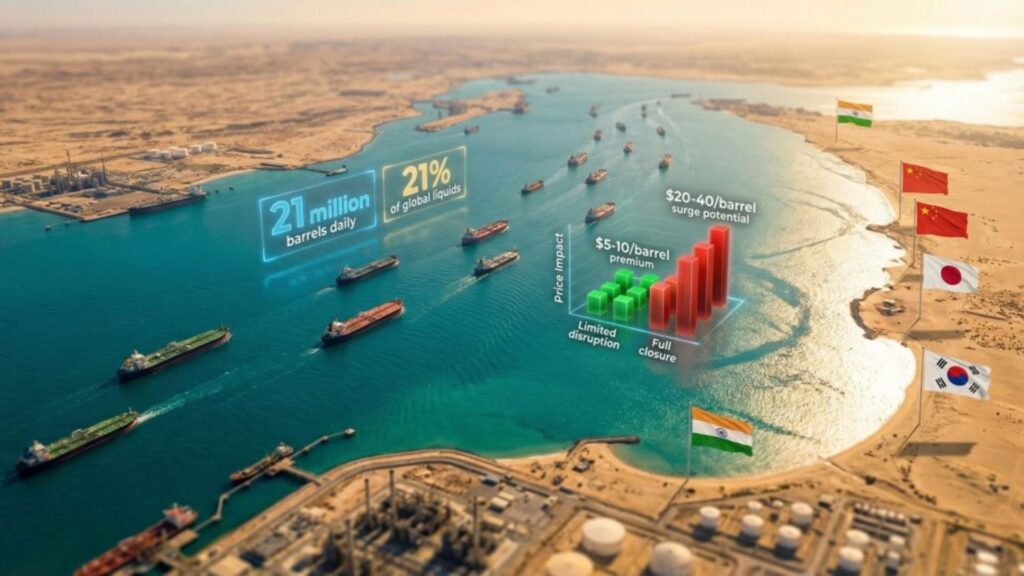
The resumption of hostilities in the Strait of Hormuz is once again putting global markets on edge. As one of the world’s most critical oil transit chokepoints, any disruption in this region directly impacts energy prices, supply chains, and economic stability worldwide.
In 2026, renewed geopolitical friction has raised serious concerns among investors, governments, and businesses. Understanding the implications is crucial for anyone involved in global trade, energy markets, or economic forecasting.
Why the Strait of Hormuz Matters
The Strait of Hormuz handles nearly 20% of the world’s oil supply. This narrow passage connects the Persian Gulf to the Arabian Sea, making it a vital artery for energy transportation.
Key reasons why this region is critical:
- Major oil exporters like Saudi Arabia, Iran, UAE, and Kuwait depend on it.
- Any blockage can spike global crude oil prices instantly.
- It influences shipping insurance, logistics costs, and global inflation.
Even minor tensions can trigger volatility in oil markets and stock exchanges worldwide.
What Triggered the 2026 Hostilities?
Recent escalations stem from a mix of political conflicts, military movements, and strategic power plays in the Gulf region. Increased naval activity and threats to commercial vessels have reignited fears of disruption.
Primary triggers include:
- Regional geopolitical disputes
- Sanctions and economic pressure
- Military posturing and naval confrontations
- Strategic control over oil routes
These factors collectively contribute to uncertainty in global energy security.
Impact on Global Oil Prices and Economy
When tensions rise in the Strait of Hormuz, the first reaction is usually seen in oil prices. Traders anticipate supply shortages, causing immediate price surges.
Economic consequences include:
- Rising fuel costs worldwide
- Increased transportation and logistics expenses
- Inflation in consumer goods
- Stock market volatility
For countries heavily dependent on oil imports, this can strain national budgets and slow economic growth.
Shipping Disruptions and Supply Chain Risks
Shipping companies face heightened risks during such conflicts. Insurance premiums for vessels passing through the strait often increase significantly.
Potential disruptions include:
- Delayed shipments
- Rerouting of cargo vessels
- Increased freight costs
- Supply shortages in key industries
Businesses relying on just-in-time supply chains are particularly vulnerable during such crises.
Strategic Alternatives and Global Response
Countries and corporations are actively exploring alternatives to reduce dependency on the Strait of Hormuz.
These include:
- Developing alternative pipeline routes
- Increasing strategic oil reserves
- Investing in renewable energy sources
- Diversifying supply chains
Governments also engage in diplomatic efforts to stabilize the region and ensure uninterrupted trade.
For more insights on global trends and strategic analysis, explore this detailed resource on geopolitical and economic developments.
Future Outlook: What to Expect
The situation in the Strait of Hormuz remains highly dynamic. While temporary de-escalation is possible, long-term stability depends on geopolitical negotiations and international cooperation.
Market analysts predict:
- Continued volatility in oil prices
- Increased focus on energy diversification
- Growth in alternative energy investments
- Stronger global risk management strategies
Final Thoughts
The resumption of hostilities in the Strait of Hormuz is more than a regional issue—it is a global economic concern. From oil prices to supply chains, its impact is far-reaching.
Staying informed and prepared is essential for businesses, investors, and policymakers navigating this uncertain landscape.