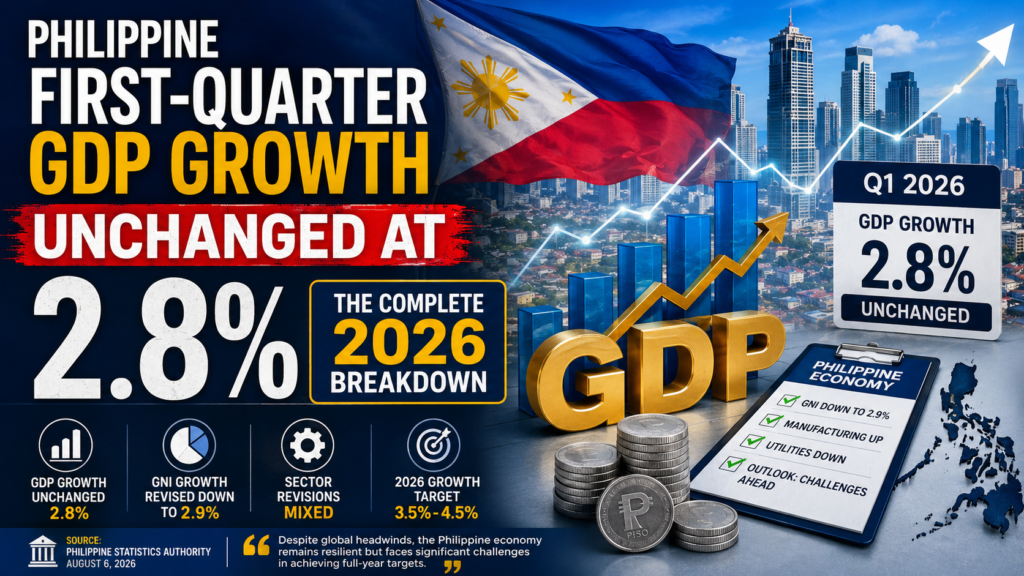
On August 6, 2026, the Philippine Statistics Authority (PSA) released its finalized economic review, confirming that the country’s first-quarter GDP growth remained unchanged at 2.8%.
While the headline Gross Domestic Product (GDP) figure stood firm, the underlying data reveals a complex, shifting landscape. The PSA reported nuanced revisions across key domestic industries and a notable downgrade in national income, painting a picture of an economy facing mixed momentum ahead of the highly anticipated second-quarter data release.
1. Gross National Income (GNI) Takes a Hit
While the GDP (the value of goods produced within the country) held steady at 2.8%, the Gross National Income (GNI) experienced a downward revision.
The PSA revised the Q1 2026 GNI growth downward to 2.9%, dropping from the initially reported 3.0%. This specific metric is crucial because it measures GDP plus the net primary income from the rest of the world—a vital indicator for a country heavily reliant on overseas remittances.
- The Cause: Growth in net primary income from the rest of the world was lowered significantly to 3.5% from 4.5%.
- The Expert View: According to Ruben Carlo O. Asuncion, Chief Economist at Union Bank of the Philippines, this revision implies that compensation from Overseas Filipino Workers (OFWs) or investment income contributed less to overall national growth than first estimated. However, he noted that the income still expanded, remaining a positive contributor to the economy.
2. Sector Revisions: The Winners and Losers
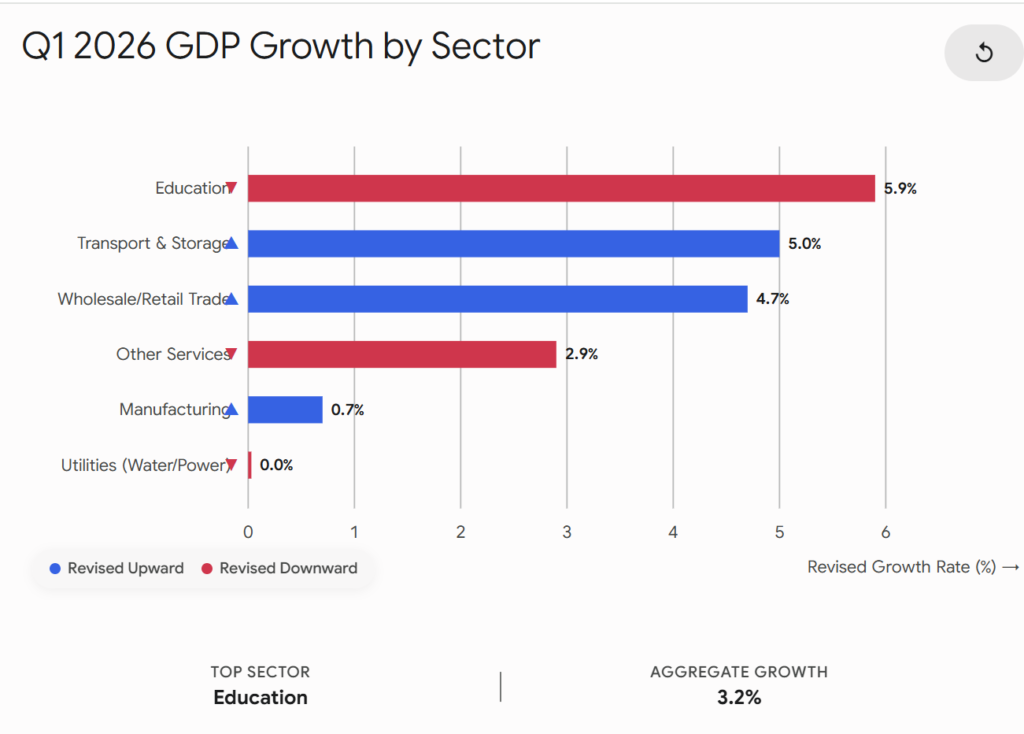
The PSA routinely revises GDP estimates based on approved policies aligned with international standard practices. The latest supply-side review of the national accounts revealed mixed adjustments across key industries.
Sectors Revised Upward (Better momentum than initially reported):
- Transportation and Storage: Adjusted to 5.0% (from 4.4%).
- Wholesale and Retail Trade (including motor repair): Edged up to 4.7% (from 4.6%).
- Manufacturing: Revised upward to 0.7% (from a sluggish 0.5%).
Sectors Revised Downward (Slowing momentum):
- Education: Trimmed to 5.9% (from 6.1%).
- Other Services: Experienced a notable downgrade, dropping to 2.9% (from 3.9%).
- Utilities (Electricity, Steam, Water & Waste Management): Nearly flatlined, plunging drastically to a mere 0.03% (down from 0.7%).
3. The 2026 Economic Outlook: Missing the Target?
The confirmation that the first-quarter GDP growth was unchanged at 2.8% places immense pressure on the rest of the year. To put this into historical context, if we exclude the pandemic period, this 2.8% Q1 growth rate is the lowest since the fourth quarter of 2009.
Looking ahead to the second quarter (April-to-June), a recent BusinessWorld poll of 21 economists yielded a median GDP growth estimate of exactly 2.8%.
If the Q2 figures align with these projections, it would mean the Philippine economy averaged 2.8% growth for the first half of 2026. This performance would fall significantly short of the government’s official full-year growth target of 3.5% to 4.5%. The economy is currently navigating a tough landscape of inflation pressures, a shifting global trade environment, and the need for stronger domestic consumption.
Frequently Asked Questions (Q&A)
Here are the most searched questions regarding the latest economic data from the Philippine Statistics Authority:
Q: Why was the Philippine first-quarter GDP growth unchanged at 2.8%?
A: The Philippine Statistics Authority (PSA) reviews preliminary data against finalized industry reports based on international standard practices. While individual sectors (like manufacturing and utilities) saw mixed adjustments up and down, these changes canceled each other out, leaving the headline macro figure steady at 2.8%.
Q: What is the difference between GDP and GNI in this report?
A: Gross Domestic Product (GDP) measures the value of all goods and services produced inside the Philippines. Gross National Income (GNI) is GDP plus the net income earned from overseas. While GDP was unchanged, GNI was revised downward to 2.9% due to weaker-than-expected income flows from abroad (like OFW remittances and investment income).
Q: Which sector saw the biggest downward revision in Q1?
A: The “Electricity, steam, water and waste management” sector saw the most dramatic downward revision, plunging from an initial estimate of 0.7% growth to a near-flatline of 0.03%.
Q: What is the Philippine government’s GDP growth target for 2026?
A: The government’s full-year target is 3.5% to 4.5%. With Q1 confirmed at 2.8% and Q2 expected to be similar, achieving this annual target will require a massive acceleration in the third and fourth quarters.
For more Updates, visit: Buzz Content Corner
Follow us on
Facebook: https://www.facebook.com/Buzzcontentcorners/
Instagram: https://www.instagram.com/buzzcontentcorner