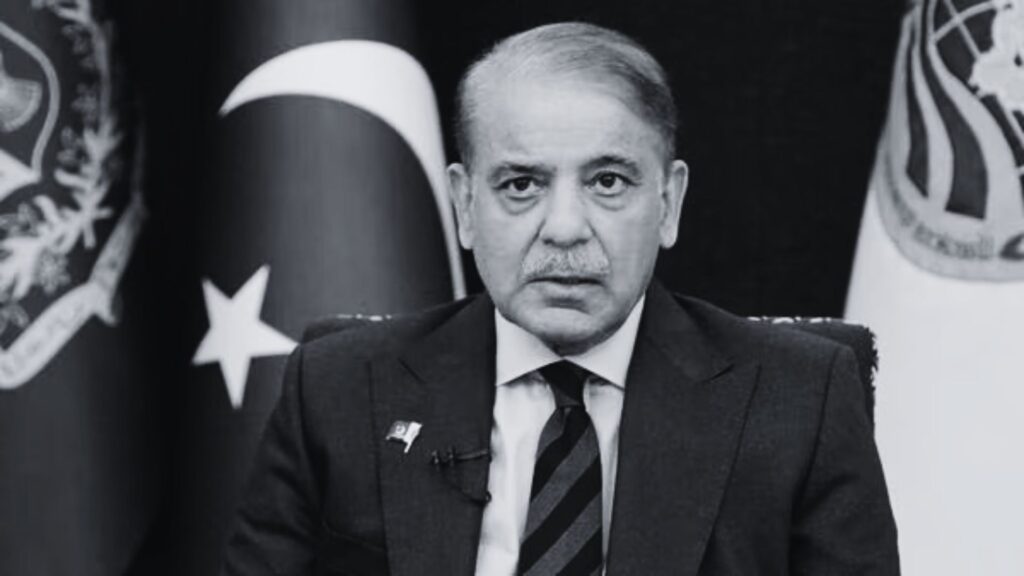
Pakistan Prime Minister Shehbaz Sharif used his Eid-ul-Fitr message in April 2024 to express solidarity with Palestinians and Kashmiris, saying Muslims celebrating Eid should remember people facing conflict and hardship.
The comments attracted attention in India because Sharif used language describing Palestinians and Kashmiris as facing the “worst kind of atrocities” from “occupation forces.”
Those words should be understood as Sharif’s and Pakistan’s characterization, rather than presented as a neutral finding accepted by all sides.
India strongly rejects Pakistan’s description of Jammu and Kashmir and maintains that the Union Territories of Jammu and Kashmir and Ladakh are integral parts of India.
The Gaza conflict, meanwhile, had reached a severe humanitarian stage by April 2024, with the United Nations describing conditions in Gaza as an unprecedented humanitarian crisis.
So what exactly did Sharif say, what was happening at the time, and how should the remarks be understood today?
What Did Shehbaz Sharif Say in His Eid Message?
Pakistan celebrated Eid-ul-Fitr on April 10, 2024.
In his official Eid message, Shehbaz Sharif spoke first about the broader meaning of Ramadan and Eid.
He highlighted:
- compassion;
- generosity;
- solidarity;
- helping poorer members of society;
- respect for Pakistan’s armed forces and martyrs.
He then urged Muslims to remember Palestinians and Kashmiris during Eid.
Pakistan’s state broadcaster quoted him urging people to remember those who, in his words, were facing the “worst kind of atrocities” and were unable to enjoy Eid normally.
This was not an isolated social-media comment. It was part of the prime minister’s official Eid message and reflected positions Pakistan had expressed repeatedly before and after April 2024.
Did Sharif Directly Say Kashmir and Palestine Are the Same Conflict?
Not exactly.
Some media headlines described Sharif as comparing Kashmir with Palestine, because he mentioned the two together and used similar language about occupation and suffering.
But the two conflicts have very different:
- histories;
- territorial arrangements;
- legal frameworks;
- political actors;
- international diplomatic processes.
A factual article should therefore avoid implying that they are legally or historically identical.
A more accurate formulation is:
Sharif linked the two politically in his Eid message by expressing solidarity with both Palestinians and Kashmiris.
That distinction matters.
Why Was Gaza Central to Eid Messages in April 2024?
Sharif’s remarks came during the Gaza war that followed the Hamas-led attacks on Israel on October 7, 2023 and Israel’s subsequent military campaign in Gaza.
By early April 2024, the United Nations Office for the Coordination of Humanitarian Affairs described Gaza as facing an “unprecedented humanitarian crisis,” citing intense hostilities, infrastructure destruction and severe obstacles to humanitarian access.
Only a few weeks before Eid, on March 25, 2024, the UN Security Council adopted Resolution 2728.
It demanded:
- an immediate ceasefire for Ramadan;
- the immediate and unconditional release of hostages;
- expanded humanitarian assistance.
The resolution passed with 14 votes in favour and the United States abstaining.
That international context helps explain why Gaza occupied such a prominent place in political and religious messages during Eid 2024.
For more detail on that UN decision, BCC can internally link to:
UN Security Council Ramadan Ceasefire Resolution Explained
What Is Pakistan’s Position on Jammu and Kashmir?
Pakistan has long maintained that Jammu and Kashmir is an unresolved international dispute.
Its governments have repeatedly called for a settlement involving the Kashmiri people and have referred to historical United Nations Security Council resolutions.
The UN Security Council did formally take up the India-Pakistan dispute over Jammu and Kashmir beginning in the late 1940s. Its historical records include several resolutions and mediation efforts involving the territory.
Pakistan’s official position remains that it will provide what it describes as:
- political support;
- diplomatic support;
- moral support
for Kashmiris.
Sharif repeated essentially the same position in August 2026, when he said resolution of the Jammu and Kashmir issue remained a central part of Pakistan’s foreign policy.
These are Pakistan’s stated positions and should be identified as such.
What Is India’s Position?
India’s position is fundamentally different.
The Government of India has consistently maintained that Jammu and Kashmir and Ladakh are integral and inalienable parts of India.
India also argues that issues between India and Pakistan should be dealt with bilaterally, in line with agreements such as the 1972 Simla Agreement.
The Simla Agreement committed the two countries to resolving differences through peaceful means and specifically addressed the Line of Control in Jammu and Kashmir.
India therefore rejects Pakistan’s terminology referring to the Indian-administered part of Jammu and Kashmir as an occupied territory.
That disagreement over terminology is important.
A neutral news article should generally use descriptive language such as:
Indian-administered Jammu and Kashmir
when discussing competing international positions, while accurately quoting the terminology used by each government when relevant.
Were There Human Rights Concerns in Kashmir?
The question should not be reduced to saying either:
“Pakistan’s allegations are completely proven”
or
“There have never been human-rights concerns.”
The UN Office of the High Commissioner for Human Rights published reports in 2018 and 2019 concerning human-rights allegations on both the Indian-administered and Pakistan-administered sides of Kashmir.
The 2019 report also acknowledged an important limitation: OHCHR had not been granted direct access and relied on documented information assessed under its stated evidentiary standard.
That means an accurate article should distinguish between:
- allegations;
- documented concerns;
- government denials;
- political terminology.
It should not automatically reproduce one government’s political description as an uncontested fact.
What Did Saudi Arabia and Pakistan Say About Kashmir Days Earlier?
Sharif’s Eid remarks also followed an important diplomatic meeting.
On April 7, 2024, Shehbaz Sharif met Saudi Crown Prince Mohammed bin Salman in Makkah.
Their joint statement was issued on April 8.
It said the two sides stressed the importance of dialogue between Pakistan and India to resolve outstanding issues, especially Jammu and Kashmir, in the interest of regional peace and stability.
Notably, the joint statement emphasized dialogue, rather than adopting all of Pakistan’s rhetoric about the dispute.
This made the statement politically important because Saudi Arabia maintains close relationships with both Pakistan and India.
Did India Officially Respond to Sharif’s Specific Eid Comment?
Contemporary reporting noted that India had not issued a specific official response to Sharif’s particular Eid remarks at the time the story was published.
That is different from saying India had no position.
India’s broader policy was already well established.
New Delhi consistently rejected Pakistan’s characterization of Kashmir and maintained that Jammu and Kashmir is an integral part of India.
Therefore, the corrected wording should be:
India did not immediately issue a separate response to this specific Eid statement, but its established position on Jammu and Kashmir directly contradicted Sharif’s characterization.
That is more precise than implying a fresh India-Pakistan diplomatic confrontation occurred because of the Eid message itself.
Why Calling the Remarks “Controversial” Needs Context
The original headline describes Sharif’s remarks as “controversial.”
That is understandable from an Indian news perspective because Pakistan’s use of terms such as “occupation forces” directly conflicts with India’s sovereignty claim.
However, the article itself should explain why the wording was controversial instead of simply attaching the label.
The controversy came from three things:
- Sharif placed Kashmir and Palestine together in the same political appeal.
- He described Kashmiris as facing atrocities from “occupation forces.”
- That terminology contradicts India’s official position on Jammu and Kashmir.
That provides readers with context without telling them which political interpretation they must accept.
The Original Article Contains an Unrelated Error
One paragraph in the current Buzz Content Corner page says:
“the legal battle over his removal from the post of Officer on Special Duty (OSD) continues.”
That statement is completely unrelated to Shehbaz Sharif, Pakistan’s prime minister, Kashmir, Palestine or the Eid message.
It appears to be content accidentally inserted from another story.
Delete it completely.
Do not rewrite or attempt to explain it.
Pakistan’s Position on Palestine Continued After 2024
Sharif’s 2024 Eid message was also consistent with Pakistan’s long-standing diplomatic support for Palestinian statehood.
That policy continued into 2026.
In January 2026, Pakistan announced that it would participate in a new Board of Peace framework connected with implementation of a Gaza peace plan. Pakistan said it hoped the process would support a permanent ceasefire, humanitarian assistance, reconstruction and a political process leading toward Palestinian self-determination.
In February 2026, Sharif again publicly called for an independent, sovereign and contiguous Palestinian state in line with relevant UN resolutions.
Pakistan’s foreign ministry repeated that position again in August 2026.
So the Palestine portion of Sharif’s Eid message was not a one-off statement.
It reflected Pakistan’s continuing foreign-policy position.
Pakistan’s Kashmir Position Also Continued in 2026
The same is true of Kashmir.
In an official August 5, 2026 message, Sharif again expressed Pakistan’s support for Kashmiris and repeated his government’s call for a settlement based on Pakistan’s interpretation of international law and relevant UN resolutions.
This continuity is useful because it puts the original 2024 article in perspective.
The Eid message did not mark a major shift in Pakistan’s policy.
It was a restatement of positions Pakistan had held for decades, delivered during a religious holiday and against the backdrop of the Gaza crisis.
Kashmir and Palestine: Why the Comparison Is Politically Sensitive
The political comparison is sensitive partly because both issues involve:
- contested territory;
- national identity;
- competing historical narratives;
- self-determination claims;
- security concerns;
- international diplomacy.
But similarities at that broad level do not make the conflicts identical.
The Kashmir dispute emerged from the 1947 partition of British India and accession of the former princely state, followed by wars and decades of India-Pakistan rivalry.
The Israeli-Palestinian conflict has its own separate historical development involving the end of the British Mandate, the creation of Israel, successive wars, occupation, Palestinian displacement and repeated diplomatic efforts toward Palestinian statehood.
A useful news article should explain why a politician links them, while avoiding presenting that comparison as an objective legal equivalence.
Timeline
| Date | Development |
|---|---|
| March 25, 2024 | UN Security Council demands immediate Gaza ceasefire for Ramadan |
| April 7, 2024 | Sharif meets Saudi Crown Prince Mohammed bin Salman |
| April 8 | Saudi-Pakistan statement calls for India-Pakistan dialogue on Kashmir |
| April 9 | Pakistan’s official Eid messages released |
| April 10 | Eid-ul-Fitr celebrated in Pakistan |
| April 2024 | Sharif urges Muslims to remember Palestinians and Kashmiris |
| January 2026 | Pakistan joins Gaza peace framework |
| August 2026 | Sharif again reiterates Pakistan’s Kashmir position |
| August 2026 | Pakistan reiterates support for Palestinian statehood |
Frequently Asked Questions
What did Shehbaz Sharif say on Eid in 2024?
He urged Muslims to remember Palestinians and Kashmiris and described them as facing severe suffering and what he called atrocities by occupation forces.
Did Shehbaz Sharif compare Kashmir with Palestine?
He mentioned both together and used similar political language about suffering and occupation. Some news coverage described this as a comparison, although the two conflicts have distinct histories and legal circumstances.
What is Pakistan’s position on Kashmir?
Pakistan treats Jammu and Kashmir as a disputed territory and supports what it describes as Kashmiri self-determination under relevant UN resolutions.
What is India’s position?
India maintains that Jammu and Kashmir and Ladakh are integral and inalienable parts of India.
Did India respond directly to the 2024 Eid message?
No immediate separate official Indian response to the specific Eid remarks was reported at the time. India’s established policy, however, rejected Pakistan’s characterization.
What did Pakistan and Saudi Arabia say about Kashmir in April 2024?
Their joint statement called for dialogue between India and Pakistan to resolve outstanding issues, particularly Jammu and Kashmir, in the interest of regional peace.
Is Shehbaz Sharif still expressing similar views in 2026?
Yes. His government continued to voice support for Pakistan’s position on Kashmir and Palestinian statehood during 2026.
Final Takeaway
Shehbaz Sharif’s Eid 2024 message became politically sensitive because he placed Kashmiris and Palestinians together in an appeal for solidarity and described them as facing atrocities from what he called occupation forces.
That wording reflected Pakistan’s political and diplomatic position.
It should not be presented as an uncontested description of Jammu and Kashmir.
India maintains the opposite position: that Jammu and Kashmir and Ladakh are integral parts of India and that outstanding bilateral issues with Pakistan should be addressed through established bilateral frameworks.
The Gaza context was also substantial.
At the time of Eid 2024, the United Nations was warning of an unprecedented humanitarian crisis in Gaza, and the Security Council had recently demanded an immediate ceasefire for Ramadan, humanitarian access and the release of hostages.
Sharif’s comments therefore combined two established elements of Pakistani foreign policy in a single religious-holiday message:
support for Pakistan’s position on Kashmir and support for Palestinian statehood.
Those positions remained broadly consistent through 2026. Sharif continued advocating Pakistan’s Kashmir policy, while his government also remained diplomatically involved in efforts concerning Gaza and Palestinian statehood.
The fairest way to report the 2024 episode today is therefore not to tell readers that Sharif’s claims were automatically true or false.
It is to explain:
what he said → why it drew attention → Pakistan’s position → India’s opposing position → the Gaza context → what happened afterward.
For more political coverage:
For the related Gaza vote:
UN Security Council Passes Ramadan Gaza Ceasefire Resolution