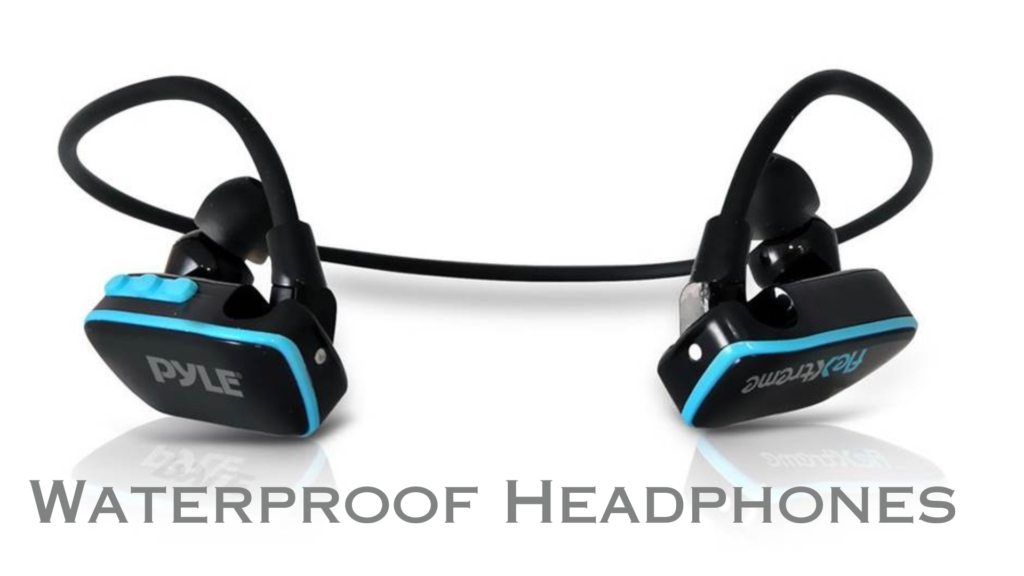
Music can make long swimming sessions feel less repetitive, whether you are training for fitness, completing laps or simply spending time in the pool.
But listening underwater is very different from wearing ordinary wireless earbuds at the gym.
The best waterproof swimming headphones are specifically designed for repeated submersion, use secure swimming-friendly designs and, importantly, do not depend entirely on a normal Bluetooth connection while your head is underwater.
Modern swim headphones increasingly combine IP68 water protection, bone-conduction audio and built-in music storage, allowing swimmers to listen without carrying a smartphone into the water.
Before buying, however, there are several important things to understand.
Why Normal Bluetooth Headphones Don’t Work Well Underwater
One of the biggest misconceptions about swimming headphones is that any waterproof Bluetooth headset can stream music from a phone beside the pool.
In practice, Bluetooth signals are heavily disrupted by water.
That means a headset may connect perfectly while you are standing beside the pool but lose or repeatedly interrupt the connection once your head goes underwater.
Shokz explicitly states that its OpenSwim Pro uses Bluetooth on land but requires MP3 mode for underwater listening because water disrupts the Bluetooth signal. (shokz.com)
This is why built-in storage is one of the most valuable features in genuine swimming headphones.
Instead of streaming music from your smartphone:
Music file → stored directly on headphones → headphones play it underwater.
No wireless connection is required.
What Does IP68 Mean for Swimming Headphones?
You will often see ratings such as:
- IPX7
- IP67
- IP68
The IP rating describes protection against dust and/or water.
The first digit relates to solid-particle protection, while the second relates to water protection.
However, there is an important rule:
Do not buy swimming headphones based on the IP number alone.
A manufacturer should explicitly state that the product is designed for swimming or continuous/repeated submersion.
For example, Shokz’s swim-specific OpenSwim and OpenSwim Pro carry an IP68 rating and are explicitly designed for swimming. The company notes that OpenSwim Pro was tested under IEC 60529 conditions and can be submerged according to its specified limits. (shokz.com)
By comparison, Shokz’s IP67 OpenRun is water-resistant but is specifically described as not intended for swimming. (shokz.com)
So rather than asking:
“Is it IPX7 or IP68?”
Ask:
“Does the manufacturer specifically approve this model for swimming?”
That is much safer.
Bone Conduction vs In-Ear Swimming Headphones
There are two common approaches to underwater audio.
Bone-conduction swimming headphones
Bone-conduction headphones sit around the cheekbone area rather than sealing inside the ear canal.
They transmit vibrations through the bones of the skull toward the inner ear.
Advantages can include:
- nothing inserted deeply into the ear;
- secure wraparound design;
- good compatibility with swim caps and goggles;
- built-in MP3 storage on many swim-focused models; and
- comfortable use during long sessions.
This design has become particularly common in modern swimming headphones.
Waterproof in-ear headphones
Traditional waterproof earbuds create sound through speakers positioned in or near the ear canal.
They can provide a more conventional listening experience, but the fit becomes especially important underwater.
Water entering between the earbud and ear can affect audio quality, and loose earbuds may shift during turns or faster swimming.
Neither design is universally better.
The right choice depends primarily on comfort and fit.
Built-In MP3 Storage Is More Important Than Bluetooth
If you are buying headphones primarily for lap swimming, prioritize internal music storage.
For example, the current Shokz OpenSwim Pro provides 32GB of built-in storage and supports formats including MP3, FLAC, WAV, AAC and M4A. Bluetooth 5.4 can be used outside the water, but underwater playback switches to locally stored music. (shokz.com)
The original OpenSwim takes an even simpler approach: it offers 4GB of built-in MP3 storage and no Bluetooth at all, because it is specifically designed around device-free underwater playback. (shokz.com)
Another example, H2O Audio’s SONAR, combines built-in MP3 playback with its own swimming-focused bone-conduction design. (h2oaudio.com)
The takeaway is simple:
For swimming:
Built-in storage matters more than Bluetooth.
For running + swimming:
A model offering Bluetooth on land + internal storage underwater may be more convenient.
Can You Use Spotify or Apple Music Underwater?
Not in the same way you normally stream music from your phone.
Because a conventional Bluetooth connection does not reliably travel through water, streaming directly from a smartphone beside the pool is generally not practical.
Many swim headphones instead require compatible audio files to be transferred onto their internal storage.
For example, Shokz notes that the original OpenSwim cannot directly use streaming services such as Spotify or Apple Music; compatible audio files must be loaded onto the device. (shokz.com)
So check how a particular headset handles your music before buying it.
If your entire library exists only inside a streaming subscription, this is especially important.
Important Features to Look for in Swimming Headphones
1. Explicit swimming certification
Look for manufacturer wording such as:
“Designed for swimming”
rather than relying only on a water-resistance number.
2. Built-in storage
For serious swimming use, internal playback should be a priority.
For many users, 4GB is already enough for hundreds of tracks, while newer models can provide much more.
3. Secure fit
Your headphones should remain stable during:
- freestyle;
- breaststroke;
- backstroke;
- flip turns; and
- push-offs from the wall.
A secure wraparound or goggle-mounted design is particularly useful.
4. Physical controls
Touch controls that work perfectly on dry land may become frustrating around water.
Large physical buttons can be easier to operate while swimming.
5. Battery life
Most swimmers do not need extreme battery life for a single session.
Around 6–10 hours of actual playback can already cover several training sessions for many users.
Check whether the advertised battery figure applies to Bluetooth mode or internal MP3 mode, because they may differ.
6. Supported audio formats
Useful formats can include:
- MP3
- AAC
- FLAC
- WAV
- M4A
Verify compatibility before transferring a large music library.
7. Charging design
Check whether the device uses:
- proprietary magnetic charging;
- a special charging cradle; or
- USB-C.
A proprietary cable is not necessarily bad, but losing it can be inconvenient.
Pool Water and Salt Water Require Extra Care
“Waterproof” does not mean maintenance-free.
Chlorine and salt can be corrosive over time.
Shokz recommends cleaning swim headphones promptly after exposure to salt water or chlorine and allowing them to dry before charging. The company also warns that water resistance can decline over time through ordinary wear. (shokz.com)
A good routine is:
- Finish swimming.
- Rinse the headphones with clean fresh water if permitted by the manufacturer.
- Wipe away excess moisture.
- Allow them to dry fully.
- Charge only once the charging contacts are dry.
Always follow the instructions for the specific model.
Swimming Headphones vs Ordinary Sports Headphones
| Feature | Swimming Headphones | Ordinary Sports Headphones |
|---|---|---|
| Sweat resistance | Yes | Usually |
| Rain protection | Usually | Often |
| Full swimming use | Yes, when specifically rated | Usually no |
| Built-in music storage | Common | Rare |
| Bluetooth underwater | Limited/unreliable | Limited/unreliable |
| Bone conduction | Common | Available |
| Repeated submersion | Designed for it | Usually not |
This is why a pair of expensive running headphones should not automatically be taken into the pool.
Water resistance for sweat and rain is a very different use case from repeated submersion during a 60-minute swim.
Current Types of Waterproof Swimming Headphones
Rather than ranking specific products—which can become outdated quickly—it is more useful to understand the three main categories available in 2026.
Dedicated swimming MP3 headphones
Example: Shokz OpenSwim
Best for swimmers who only need underwater music.
It offers IP68 protection, built-in storage and does not include Bluetooth. (shokz.com)
Hybrid swimming + everyday headphones
Example: Shokz OpenSwim Pro
These combine Bluetooth for normal workouts with local MP3 playback for swimming.
That makes them more versatile if you want one headset for:
- running;
- gym workouts;
- cycling; and
- swimming.
Goggle-mounted underwater systems
Products such as H2O Audio SONAR use bone-conduction speakers designed to work with swimming goggles and include local music storage. (h2oaudio.com)
Each approach has advantages.
Choose based on your activity rather than buying whichever product advertises the largest number.
What Should You Avoid?
Avoid buying swimming headphones purely because the listing says:
“Waterproof.”
Check the actual documentation.
Also avoid these common mistakes:
- assuming IPX7 automatically means suitable for lap swimming;
- expecting normal Bluetooth streaming underwater;
- buying without checking internal storage;
- ignoring supported audio-file formats;
- charging the headphones while wet;
- assuming saltwater use follows the same conditions as pool use;
- buying a loose-fitting design for competitive swimming; and
- trusting unsupported marketplace claims instead of manufacturer specifications.
Are Waterproof Swimming Headphones Safe?
Used correctly, swimming-specific headphones can be convenient for training.
However, swimmers should still remain aware of their surroundings, especially in:
- crowded lanes;
- open water;
- beaches;
- lakes; and
- areas with boats or other hazards.
Open-water swimming requires particular situational awareness.
Shokz itself advises users of its open-ear swimming products to remain alert to surroundings and follow local safety rules. (shokz.com)
Music should improve the workout, not reduce awareness of a potentially dangerous environment.
Frequently Asked Questions
Can Bluetooth headphones work underwater?
Bluetooth performance drops dramatically underwater. For reliable swimming audio, headphones with built-in storage and local MP3 playback are generally a better solution. (shokz.com)
Is IPX7 enough for swimming?
Do not rely on IPX7 alone. Check whether the manufacturer specifically states that the product is intended for repeated swimming and submersion.
Is IP68 waterproof?
IP68 represents a high level of dust and water protection, but the exact depth, duration and permitted conditions are defined by the manufacturer’s tested specification. It does not mean unlimited underwater use. (shokz.com)
Are bone-conduction headphones good for swimming?
They are popular for swimming because they do not require a conventional speaker sealed inside the ear canal and can be incorporated into secure wraparound designs.
Can I listen to Spotify while swimming?
Direct Bluetooth streaming from a nearby smartphone generally does not work reliably once the headset is submerged. Many swimming headphones require music files to be stored locally.
Should I rinse swimming headphones after pool use?
Follow your manufacturer’s instructions. Swim-specific manufacturers may recommend rinsing away chlorine or salt and completely drying the unit before charging. (shokz.com)
Final Takeaway
Choosing the best waterproof swimming headphones is not about finding ordinary earbuds with the highest waterproof number.
A genuine swimming headset should be designed specifically for repeated water use.
The most important features are:
swimming-approved waterproofing, secure fit, local music storage, comfortable audio technology, practical controls and easy maintenance.
The biggest thing buyers need to understand in 2026 is that Bluetooth and water do not work well together.
For lap swimming, built-in MP3 playback remains one of the most dependable solutions.
If you want headphones exclusively for swimming, a dedicated IP68 MP3 model may be sufficient.
If you want the same headset for running, gym sessions and swimming, a hybrid model that provides Bluetooth above water and internal storage below water can make more sense.
Either way, read the manufacturer’s actual immersion limits before entering the pool.
For more guides covering smartphones, wearables and consumer technology, visit the Buzz Content Corner Technology section.
Also read: