Updated: October 6, 2026. Bangladesh’s economic slowdown has become harder to dismiss as a temporary dip. The World Bank now projects gross domestic product growth of 3.4% in both FY26 and FY27, saying energy shortages, weaknesses in the banking system and low domestic revenue are suppressing investment and economic activity.
The important point is not the headline number alone. Bangladesh has spent much of the past decade associated with rapid export-led growth. A prolonged period near 3% changes the conversation from “when will growth rebound?” to “what has to be fixed before a rebound becomes durable?”
Bangladesh’s 3.4% forecast in brief
- The World Bank projects GDP growth at 3.4% in FY26 and FY27.
- Growth could improve to about 3.9% in FY28 if energy constraints ease and reforms accelerate.
- Private investment remains weak and export momentum has softened.
- Banking-sector stress and a high level of non-performing loans remain major risks.
- Strong remittances and improving foreign-exchange reserves are providing some external stability.
Why has growth slowed?
Three issues stand out in the World Bank’s assessment: energy, finance and revenue.
First, unreliable and costly energy makes it harder for factories to plan production. Businesses can absorb a short disruption; persistent shortages are different. They raise costs, reduce capacity utilisation and weaken competitiveness just when exporters need to protect margins.
Second, a fragile banking system makes productive investment more difficult. When banks are carrying large volumes of troubled loans, credit does not move through the economy as efficiently. Healthy companies can face tighter financing while weak borrowers continue to absorb resources.
Third, Bangladesh collects relatively little public revenue compared with the size of its economy. That limits the government’s ability to finance infrastructure, social protection and other services without increasing fiscal pressure.
Why weak investment matters more than one year of GDP
A country can recover from one weak year. A prolonged fall in private investment is more serious because it affects the economy’s future production capacity.
Businesses invest when they can see reliable energy, predictable rules, access to finance and sufficient demand. If those conditions weaken together, companies postpone factories, machinery, hiring and expansion. That slows today’s economy and reduces tomorrow’s growth potential.
The banking problem is now central
The latest update places heavy emphasis on financial-sector reform. Non-performing loans have risen sharply, while capital buffers at parts of the banking system have weakened.
The World Bank is calling for asset-quality reviews, time-bound restructuring of weak banks, stronger governance and clearer systems for resolving bad loans. These steps can be politically difficult because restructuring forces losses to be recognised. But postponing the problem usually makes the eventual adjustment more expensive.
There are still sources of resilience
The picture is not entirely negative. Remittance inflows remain an important support for household demand and the external account, while foreign-exchange reserves have improved from earlier stress levels.
That matters because a stronger external position gives policymakers more room to manage imports and currency volatility. But remittances cannot replace domestic investment indefinitely. Sustainable growth needs productive capacity inside the economy.
What would a recovery look like?
The World Bank’s path back toward stronger growth is not based on a single stimulus programme. It depends on structural changes: more reliable energy, cleaner bank balance sheets, better tax administration and a business environment that encourages private capital.
For households, the reform debate also connects to social protection. The Bank argues that better targeting could make existing programmes more effective, allowing limited public funds to reach more vulnerable families instead of relying mainly on broad subsidies.
Why this matters beyond Bangladesh
South Asia as a whole is still expected to grow strongly, but Bangladesh’s downgrade shows how different conditions can be within the same region. India’s stronger expansion lifts the regional average, while Bangladesh is dealing with a much tougher mix of energy constraints and financial stress.
For investors and businesses, the next indicators to watch are private credit growth, industrial production, export orders, inflation, energy availability and whether banking reforms move from announcements to implementation.
Frequently asked questions
What is Bangladesh’s latest World Bank growth forecast?
The World Bank projects GDP growth of 3.4% for FY26 and FY27, with a possible improvement to 3.9% in FY28 if constraints ease and reforms strengthen.
What are the biggest economic problems?
The Bank highlights energy shortages, banking-sector vulnerabilities, low revenue collection, weak investment and persistent inflation.
Is Bangladesh facing an external payments crisis?
The external position has shown greater resilience recently, helped by remittances and improved foreign-exchange reserves, although structural risks remain.
For wider regional context, read BCC’s recent look at how Indian states are competing for international investment.
Sources and further reading
- World Bank — October 6, 2026 Bangladesh Development Update press release listing
- Bangladesh Sangbad Sangstha — World Bank update and reform recommendations
- The Daily Star — Bangladesh growth and banking-sector details
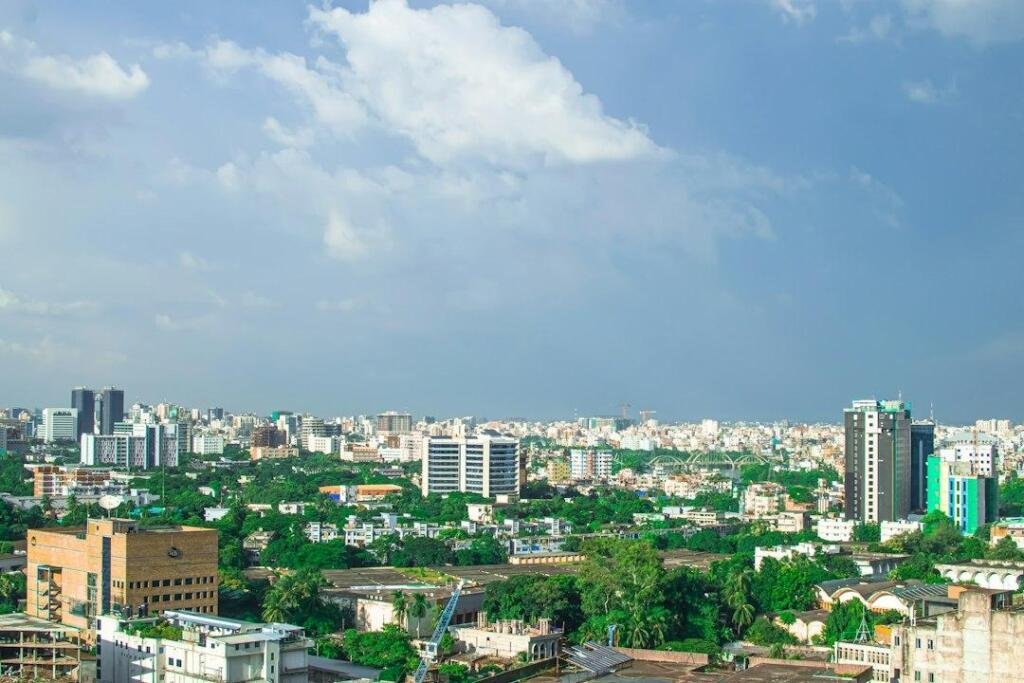
Featured image is illustrative.
Follow Buzz Content Corner
For more clear explainers on major economic and policy developments, follow Buzz Content Corner (BCC) on Instagram and Facebook.