Updated: October 14, 2026 (IST). Reporting reflects developments of October 13 unless stated.
Apple has formally entered a new phase of smart-home hardware. At its October 13, 2026 announcement, the company unveiled HomeView, a seven-inch smart display designed for shared spaces such as kitchens and living rooms. It brings together a home-control screen, FaceTime, entertainment and Siri AI, while attempting to give different members of the household their own personalized experience.
The practical question is not simply whether Apple has built another smart speaker. It is whether an always-available household display can meaningfully reduce the number of times people reach for their phones—and whether its features justify the extra device and ecosystem requirements.
Apple HomeView at a glance
- Announced: October 13, 2026.
- Availability: Apple says sales start November 13, 2026, in India, the United States and several other launch markets.
- Display: Seven-inch Liquid Retina touch display.
- Forms: Tabletop model with an integrated speaker base and a wall-mounted model.
- Main functions: Siri AI assistance, FaceTime calls, smart-home controls, music and access to relevant personal information.
- Compatibility: Several features require a compatible iPhone or iPad, while advanced Siri context features have additional device and software requirements.
What Siri AI changes in the home
Instead of only answering short voice commands, Apple positions Siri AI as a more conversational assistant capable of handling contextual requests. In a shared household, that matters most when a request depends on who is speaking and which devices are paired. A family member could ask about their calendar or reminders without exposing another person's information to everyone in the room.
Apple says HomeView recognizes enrolled users by face and shows certain personal content only when additional security conditions are satisfied, including the presence of a recently unlocked, paired iPhone or iPad. This is an important caveat: face recognition is not an invitation for the device to display every account's private messages to whoever happens to be nearby.
What can you actually do with it?
HomeView is pitched as a control point for compatible home accessories: lights, cameras, thermostats and automations. Its screen can show visual feedback where a voice-only speaker would require an app. FaceTime and media playback give it uses beyond home automation, particularly on a kitchen counter where hands-free access is valuable.
The stronger case is for households already using Apple's ecosystem. Buyers should verify their specific doorbell, security camera and thermostat compatibility, existing Apple Home setup, subscription needs and supported Siri languages before ordering. Apple notes that some functions are limited by market, paired-device support or optional subscriptions.
Privacy matters more for a shared screen
An always-on display creates a different privacy problem from a phone: it sits in a public part of the house. Apple says it uses isolated processing environments for sensitive camera and microphone data and can process Siri requests either on-device or through Private Cloud Compute. Those are Apple's published architecture claims, not a substitute for independent security testing.
Potential buyers should review which people are enrolled, how household access is managed, what is shown on the lock or idle screen and the implications of connecting surveillance cameras. A shared-room device deserves a stricter privacy setup than a personal laptop.
India price and release timing: what is confirmed?
Apple's announcement identifies India as an initial launch market with November 13 availability and pre-orders beginning October 13. Apple’s India announcement lists ₹39,900 for both the tabletop and wall-mounted models. Purpose-built wall-mount accessories cost extra, so shoppers should check the total price and configuration on Apple’s India store before purchase. US reporting lists $299 for HomeView, but direct currency conversion is not a reliable Indian retail price.
The wall-mounted option may also require additional mounting accessories. Availability of certain features—and languages—can differ between markets, so avoid treating a US feature list as a guarantee for every Indian buyer.
HomeView vs a phone, tablet or smart speaker
A tablet can already show cameras, control lights and host video calls. HomeView's difference is its household-first design and voice-activated availability. A traditional smart speaker is cheaper and simpler, but cannot offer persistent visual controls. The trade-off comes down to placement, household adoption, compatible devices and whether the extra screen removes friction from daily routines.
Bottom line: HomeView is a notable new Apple product, but its real value will depend on the devices a household already owns, the features supported in its region and how well Siri AI performs outside launch demonstrations. Readers considering pre-orders should compare official specifications and return policies rather than rely on launch-day impressions alone.
Frequently asked questions
When was Apple HomeView announced?
Apple introduced HomeView on October 13, 2026, according to its newsroom announcement.
When will Apple HomeView be available in India?
Apple says it will be available in India from November 13, 2026, with pre-orders beginning October 13.
Does HomeView require an iPhone?
Setup and multi-user support require a compatible iPhone or iPad, and some contextual Siri features require an Apple Intelligence-capable paired device.
Is Apple HomeView available in the European Union?
Apple says it is not available for sale in the EU at launch because Siri AI is not yet available there on iOS.
Related BCC reading
Sources and reporting notes
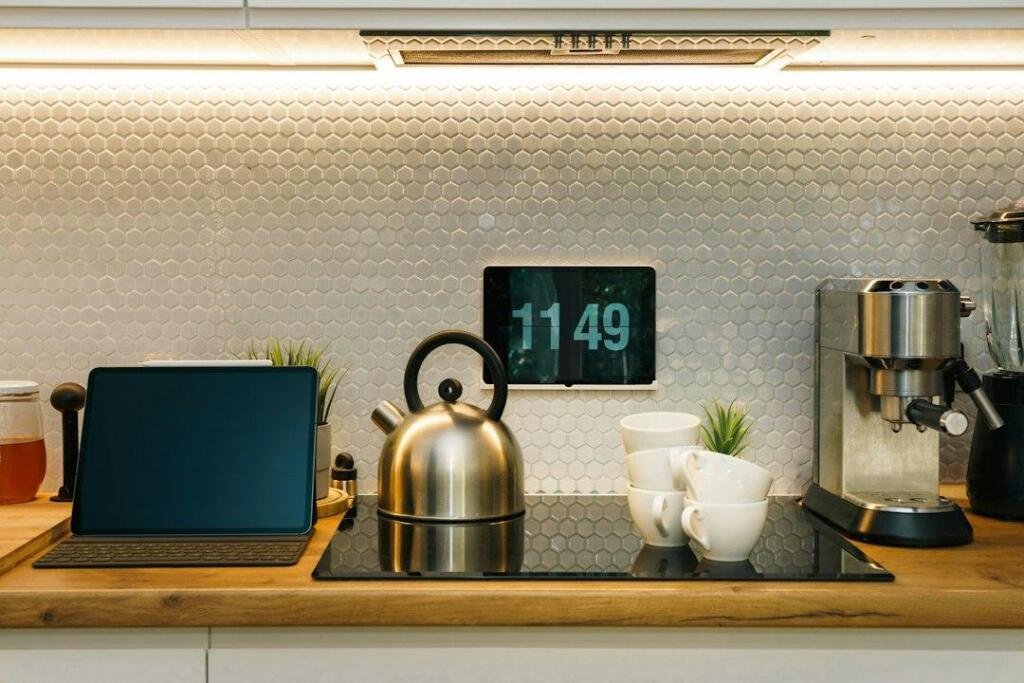
Featured photo: Jakub Żerdzicki / Unsplash. Illustrative stock image of a modern home; it does not show an actual Apple HomeView unit.
This article summarizes information available as of October 14, 2026 (IST). The linked primary or attributable reports support the dated factual claims; observations and practical guidance are editorial analysis.