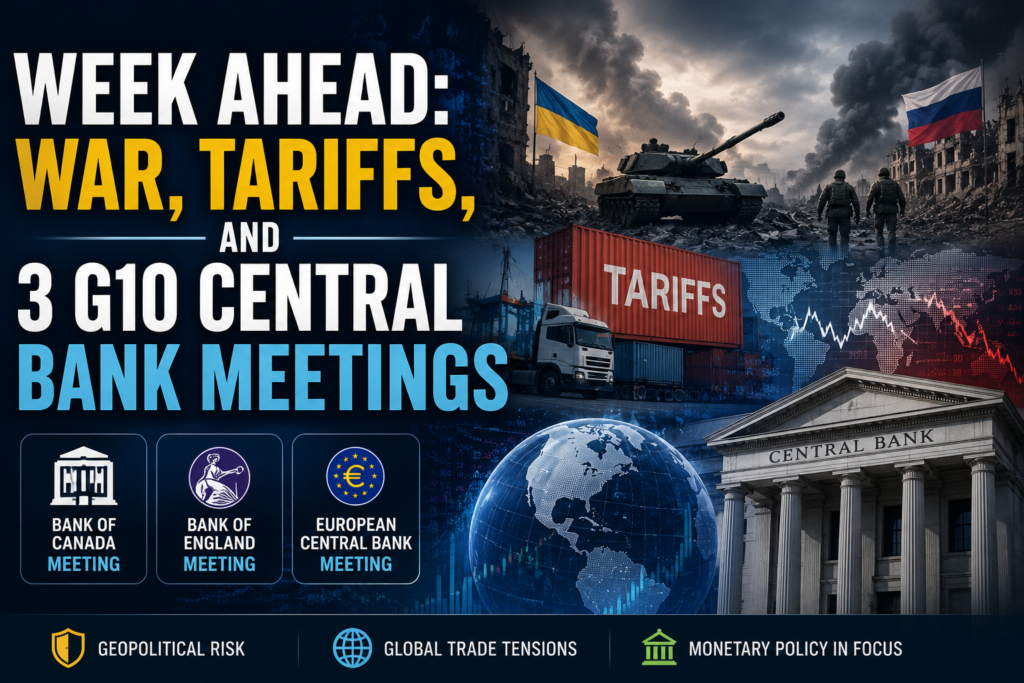
G10 central bank meetings are the main event this week, with war headlines and tariff pressure adding extra uncertainty for global markets. Investors are entering a period where monetary policy, geopolitics, and trade risks could all move at once, making this one of the most important stretches for currencies, bonds, and equities.
Key Highlights
- Three G10 central bank meetings are likely to shape market expectations.
- War risk may keep investors cautious and push money into safe-haven assets.
- Tariff concerns could affect inflation forecasts and growth sentiment.
- Currency and bond markets may react sharply to policy tone.
- Traders will watch guidance, not just interest rate decisions.
Why G10 Central Bank Meetings Matter
G10 central bank meetings matter because they influence borrowing costs, inflation expectations, and capital flows across major developed economies. Even when rates do not change, the statement and press conference can shift market sentiment quickly.
This week is especially important because central banks are meeting at a time when external risks are already high. War headlines can shake energy markets and trade routes, while tariff threats can raise fears about higher import costs and slower growth.
The Three Big Policy Risks
The first major risk is that policymakers sound more cautious than expected. If a central bank signals that inflation is still too sticky, markets may push back hopes for rate cuts.
The second risk is that a central bank turns more dovish because growth is weakening. That could pull yields lower and weaken the currency of the country in question.
The third risk is that one bank surprises markets with a sharper tone than its peers. That can create a strong currency move, especially if investors are comparing guidance across multiple G10 central bank meetings in the same week.
War Headlines And Market Sentiment
War headlines can affect markets very quickly because they raise concerns about energy supplies, shipping routes, and global stability. When geopolitical risk rises, investors often move toward safer assets such as government bonds, gold, and stable currencies.
In a week dominated by G10 central bank meetings, fresh war developments could amplify the market reaction. Even if the policy decisions are routine, a sudden escalation or diplomatic setback may shift risk appetite across asset classes.
Tariffs And The Inflation Question
Tariff pressure matters because it can feed directly into inflation and trade expectations. Higher tariffs may raise input costs for companies and make it harder for central banks to see inflation easing in a clean way.
That is why traders will be watching whether policymakers mention trade policy in their guidance. If tariffs become a bigger issue, G10 central bank meetings could sound more defensive, even if inflation data alone looks manageable.
What Markets Will Watch
Markets will focus on more than the headline rate decision. The real move often comes from the wording of the statement, the split in votes, and the tone of the press conference.
Traders will be asking:
- Is inflation still the main concern?
- Are policymakers more worried about growth?
- Is the bank preparing the market for future cuts?
- Does the guidance differ from the other G10 central bank meetings this week?
Those details often matter more than the actual vote itself.
Currency And Bond Impact
Currency markets usually react first when central bank tone changes. A more hawkish message can strengthen a currency fast, while a softer message can trigger a quick selloff.
Bond markets are also sensitive because rate expectations feed directly into yields. If the G10 central bank meetings lean dovish, bond yields may fall. If officials sound more worried about inflation, yields could stay elevated or even rise.
What Investors Should Do
Investors should expect volatility and avoid overcommitting before the meetings are finished. In a week like this, markets can move on headlines, speeches, and even small changes in wording.
A cautious approach makes sense because G10 central bank meetings often reset expectations for the next several weeks. Position sizing, stop discipline, and attention to safe-haven flows become more important when policy risk and geopolitical risk overlap.
Why This Week Is Different
This week is not just about one central bank or one data release. It is about the combination of three G10 central bank meetings, war uncertainty, and tariff concerns all hitting the market at the same time.
That creates a higher chance of cross-asset moves. Equities, currencies, bonds, gold, and oil may all react differently to the same headline depending on whether investors see it as inflationary, growth-negative, or risk-off.
Frequently Asked Questions
What are G10 central bank meetings?
These are policy meetings held by the central banks of major developed economies.
Why are they important?
They influence interest rate expectations, inflation views, and market sentiment.
How do war headlines affect markets?
They can push investors toward safe-haven assets and away from riskier trades.
Why do tariffs matter now?
Tariffs can affect inflation, trade flows, and growth expectations, which central banks care about.
Which markets are most sensitive?
Currencies, bonds, gold, oil, and equities are usually the most reactive.
Final Thoughts
G10 central bank meetings are the biggest market driver this week, but they are not happening in isolation. War risk and tariff pressure are making the backdrop more complicated and increasing the chance of sharp moves across global assets.
For traders and investors, the most important thing will be how policymakers interpret the current mix of inflation, growth, and external risk. In a week like this, the tone of the message may matter as much as the decision itself.
For more Updates, visit: Buzz Content Corner
Follow us on
Facebook: https://www.facebook.com/Buzzcontentcorners/
Instagram: https://www.instagram.com/buzzcontentcorner